The most remarkable unremarkable thing about Tilda’s is the apostrophe. What makes it special is not its gross violation of Standard Swedish Orthography, which simply uses an ‘s’ suffix to signify possession (Tildas), but the fact that everything else about the place is remarkably Swedish.
Tilda’s is, more or less, a “husmanskost” establishment, a term commonly used in Sweden for traditional home-cooked Swedish food. Originally, husmanskost was the food the staff ate – the household workers – while fancy stuff (I’m guessing smoked eel, geese, cheese, that sort of thing) was reserved for guests. And in an increasingly competitive culinary landscape, with Herkulesgatan as a shining example of gastronomic variation, eateries like Tilda’s aren’t as common as they used to be. They’re not exactly a dying breed, but these places do stand out in a city that currently promotes bubble tea, ramen, sourdough pinsa, and poke bowls. To summarize the irony: Not standing out at all is what makes Tilda’s stand out today.
Tilda’s adherence to traditional Swedish cooking (it is, after all, Hisingen’s oldest restaurant) might thus explain its audience of, well, everyone. It’s encouraging to see that the love for husmanskost transcends age, gender, ethnicity, occupation, and social status. Tilda’s (by their appearance) regulars – blue collars, white collars, students, poor people, rich people, old people, drunk people – happily partake in food they’d probably all describe as comforting. Safe to some, rustic and plentiful to others. However, in its own particular brand of diversity, Tilda’s does not cater particularly well to vegans. But that’s an inherent limitation of husmanskost: it’s almost always meat and potatoes, with a version of vegetables so overcooked that it’s hard to tell where the carrots end and the onions begin.
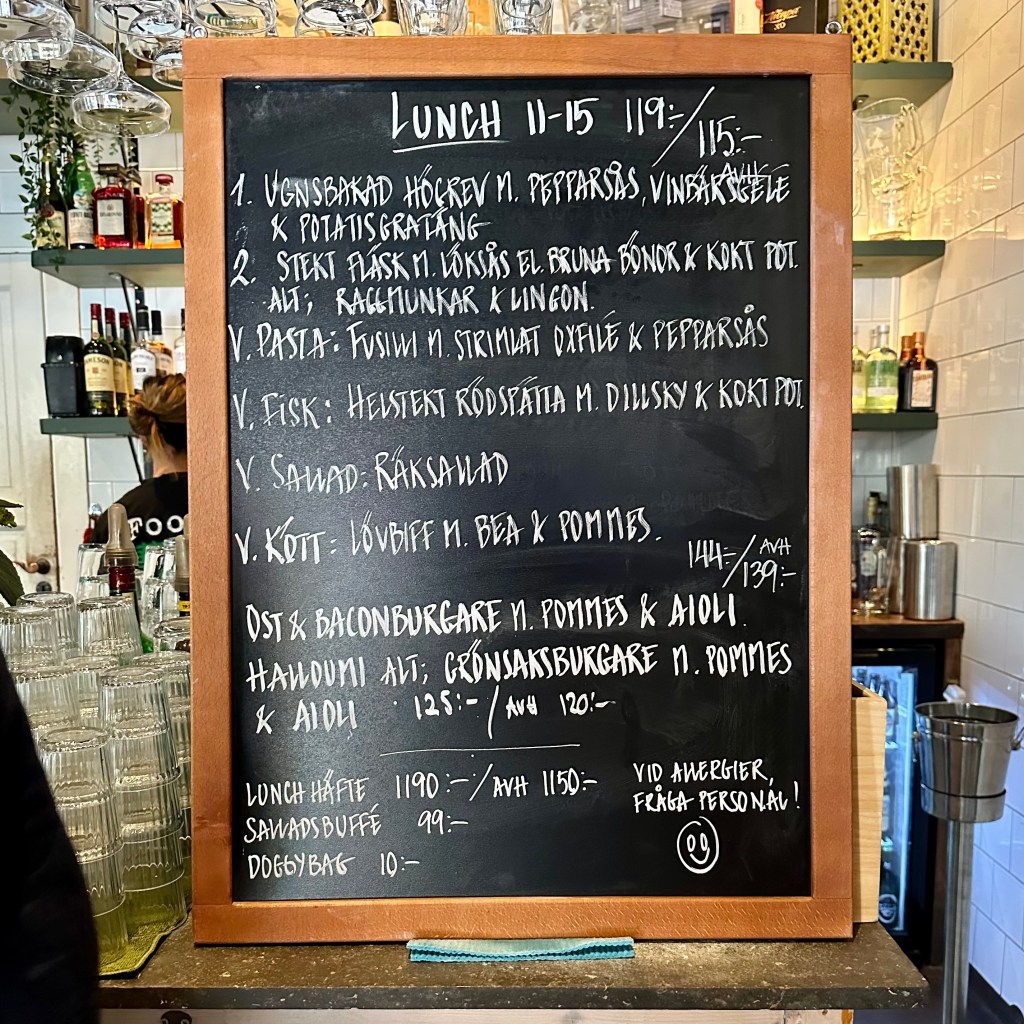
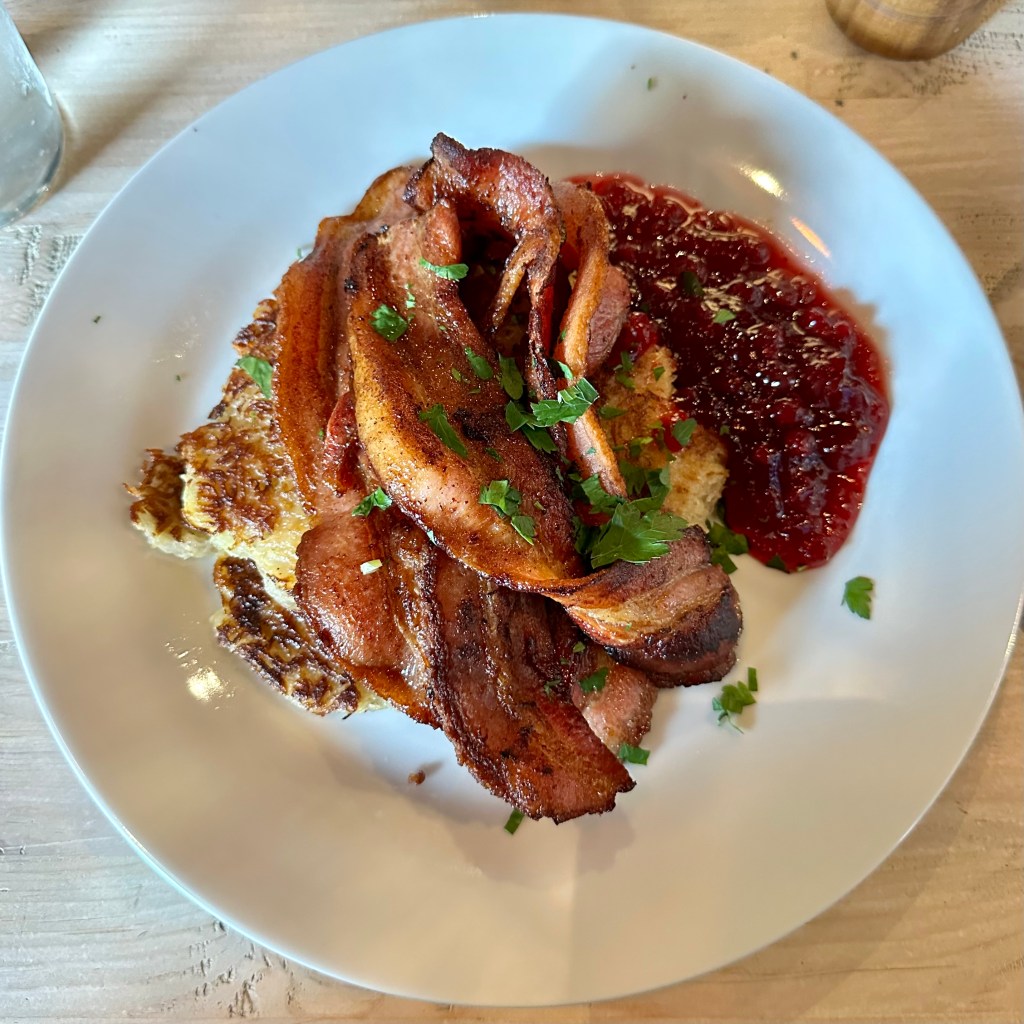
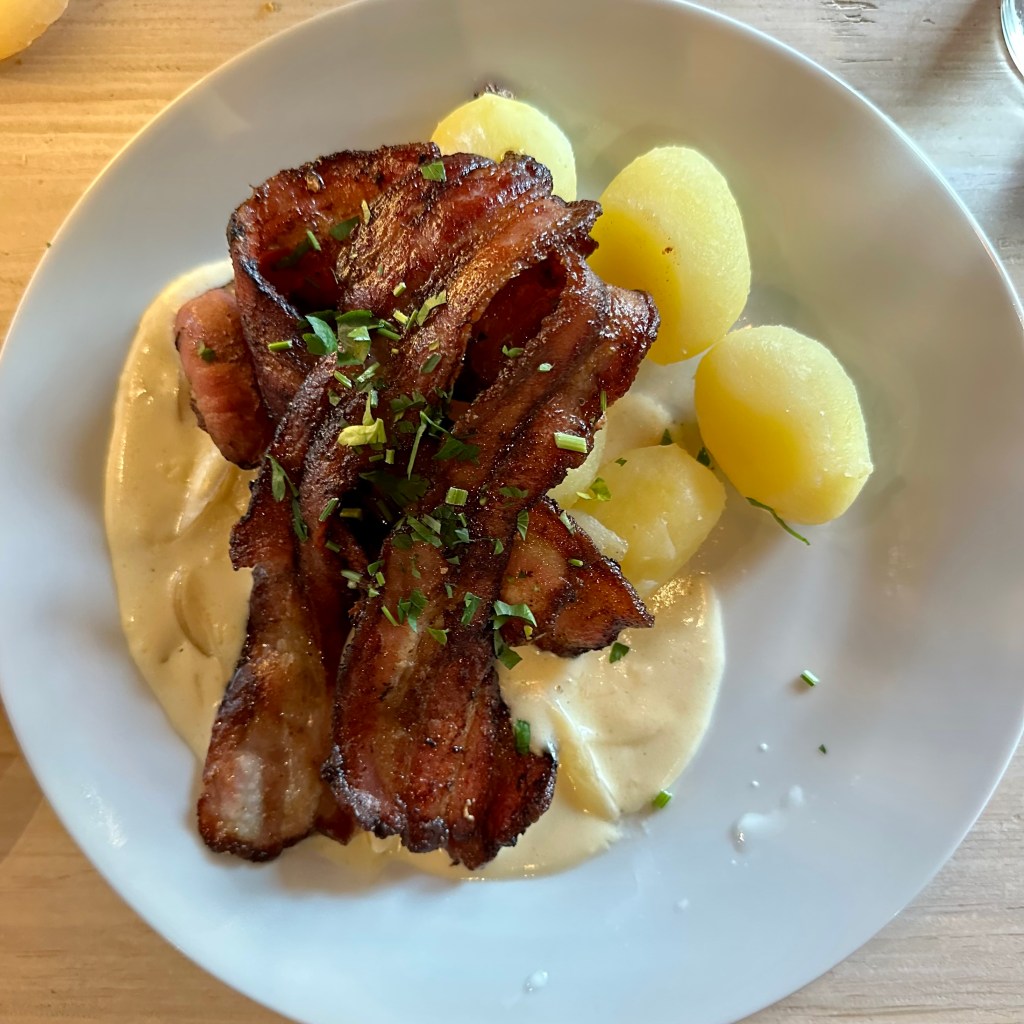
So what did we have for lunch? I had the most delicious “Stekt fläsk med löksås”. This roughly translates to fried pork with onion sauce, which, come to think of it, sounds like food served forcibly by a malevolent, meaty prison guard, sauce from the broken wooden plate splattering the walls of a tiny, damp cell on a rat-infested island. My trusted dining companion, my favorite culinary connoisseur, had “stekt fläsk med lingon och raggmunk.” The robust translation fried pork with lingonberry and potato pancake might be somewhat more appetizing, but not attractive enough to deceive anyone not born and raised in a barn. (Still, they all show up.)
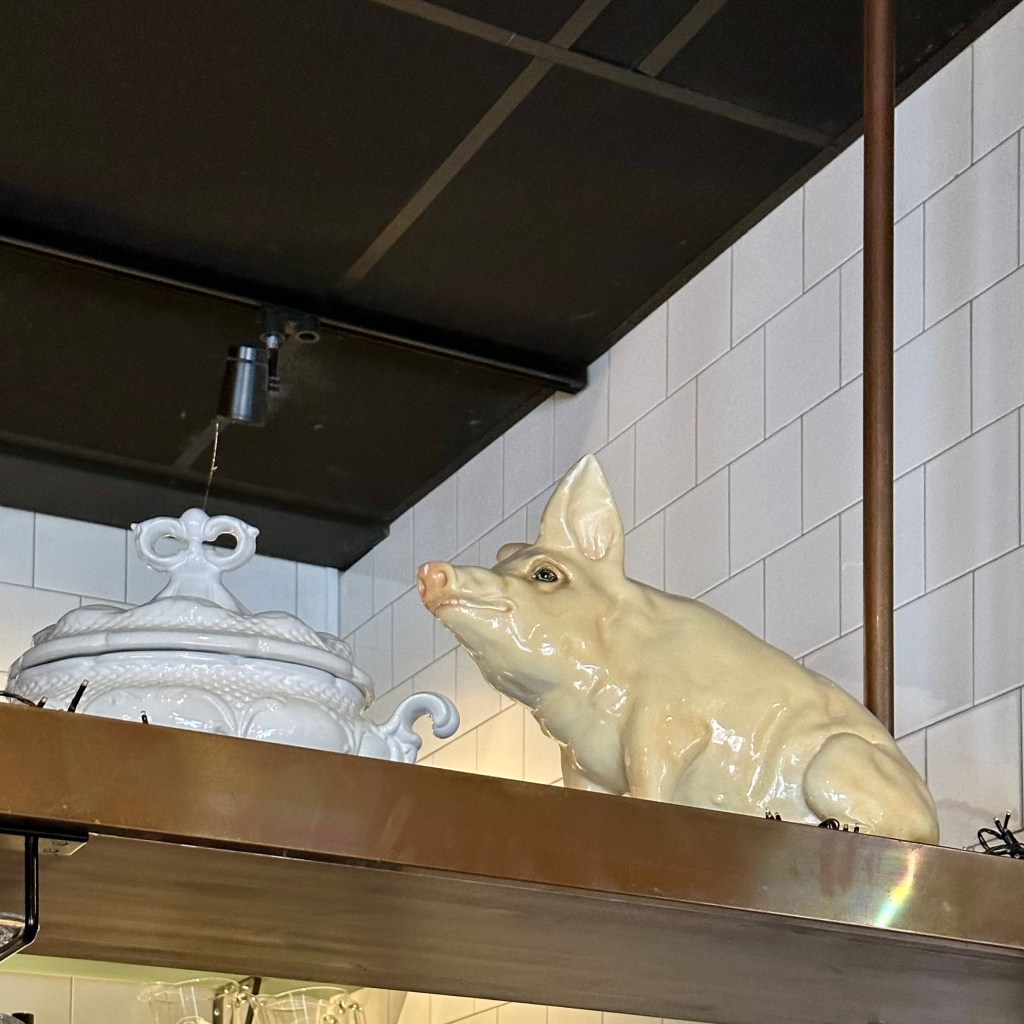
Since we both pretty much fit that description, we loved our meal. The pork was juicy, and the sides were savory, creamy, and delicious. The salad buffet was standard+, and they offered sliced lemon, adding a measure of sophistication to the sparkling water. And since they deploy a yellow porcelain pig to accessorize the interior, we’ll overlook the misused apostrophe. Still, we won’t hand out the full five stars. The husmanskost was undoubtedly great, and we cherish simplicity. But the competition in Kville is fierce, and to ace it requires extraordinary performance. It’s not enough that the most outstanding quality is not standing out. Or that it is Hisingen’s oldest restaurant (or so they claim).
- Name and address: Tilda’s, Herkulesgatan 7
- Cuisine: Swedish husmanskost
- Walking distance from Zenseact: 15 mins
- Price: 119 sek (drink included)
- Rating: 4/5 NCAP stars (Norra Älvstranden Culinary Assessment Program)
We’ll return shortly with another review. In the meantime, heed the great Robert Frost’s advice and choose the road less traveled – a wise gastronomic approach and an outstanding professional mantra for every Zenseactian.



 Off the eaten track