The UEFA Cup Final of the 1981/82 season was no ordinary clash.
It was a battle across two legs, fought on May 5 and May 19, 1982, between the underdogs from the North, IFK Göteborg, and the German giants, Hamburger SV. Over 180 unforgettable minutes, Göteborg would defy the odds and etch their name into football* history, becoming the first Nordic club ever to lift a European trophy. The aggregated score? A staggering 4–0.
In the first game, rain poured over Nya Ullevi. The match was tight, ugly, and unrelenting, with neither side willing to give an inch. As the clock ticked into its dying moments, it happened. Glenn Hysén – possibly the most iconic Gothenburg football player ever appearing in a betting commercial – rose like a titan and nodded the ball forward. At the end of his flick, Tord Holmgren waited.
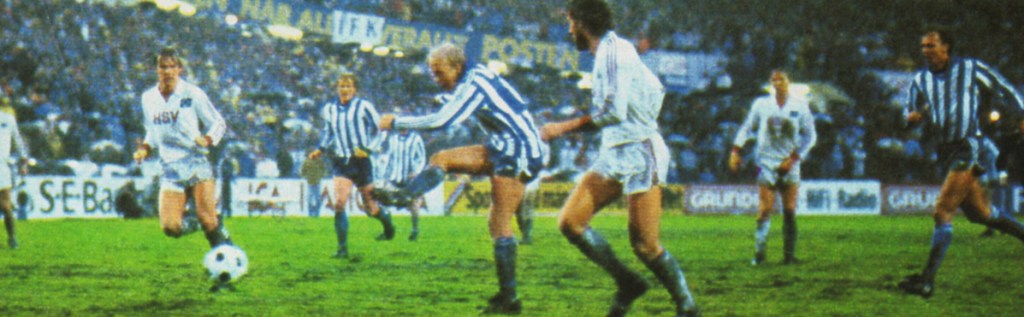
Alongside footballers like Robert Prytz, Pia Sundhage, Klas Ingesson, Lena Videkull, Stefan Schwartz, and Håkan Mild, Tord Holmgren seemed to play football with a grudge. It was as if the game itself was responsible for all the pain in their lives. These players stepped onto the pitch hating their opponents. And the ball. And the field, the ref, the crowd, quite possibly the world. Consequently, they left nothing behind, departing the pitch like empty, soaking husks. Privately, Tord would be timid and kind. As a player, he was brutal, sweaty, and dirty. It was only fair that it should be Holmgren who slotted home the night’s only goal.
Göteborg had drawn first blood.
On the second leg, the lions roared. In front of a stunned German crowd, the Comrades arrived with fire in their veins and ice in their bellies. Just 26 minutes in, Tommy Holmgren launched a wicked cross into the box.
That’s right. Tord had a brother. Tommy wasn’t quite as mean as his older brother, but twice as elegant. A fast, skillful, left-footed winger, he was a cornerstone of the team during its golden era, helping the club secure four Swedish championships – in 1982, 1983, 1984, and again in 1987.
In the first game, Tord scored the only goal. On the blessed evening of May 19, 1982, Tommy set off the fireworks. Dan Corneliusson pounced on Tommy’s beautiful cross, hammering the ball into the roof of the net from close range. The silence in the Volkparkstadion was deafening.

Ask any moderately football-interested person from Gothenburg aged 50 to 100. Most of us can still hear it deep inside when we close our eyes at night. The muffled volcano of our souls erupting. Nothing since then has ever come close to the collective euphoria of that night. Weaponized and released into the atmosphere, it could cure plagues, end wars, and dethrone presidents.
But Göteborg was just getting started.
In the second half, Torbjörn Nilsson broke free on a counterattack. Alone against the keeper, he opened up his body and passed the ball into the bottom corner with his left foot – clinical, ruthless, unforgettable. Grimy and soaking, yet calm, cunning, lethal, and savvy, Nilsson moved like James Bond – dipped in pickled herring.
And then came the final blow.
Nilsson the Conqueror was brought down inside the box, again causing havoc in his awkwardly seductive style. A penalty ensued. Stig Fredriksson stepped up. Now here’s a name that makes you think of crime writers, horse jockeys, and Social Democrats. He was also the team’s captain, and with superhuman chill (Fredriksson was born in Sorsele, a place so far north winter is more like a state of being than a season), he drove the ball straight down the middle. It was his fifth goal of the tournament.
The whistle blew and it was over. IFK Göteborg had not just won. They had dominated. A team that few expected to reach the final had obliterated the mighty Hamburg. History was made, and a Nordic legend was born. Sven-Göran Eriksson coached Gothenburg, and the referee’s name was John Carpenter.
Off the Eaten track are not young people; taking the occasional trip down random-access memory lane must be okay. Also, that’s inevitably what happens since all good things come to an end.
For instance, the Swedish Chinese Restaurant Phenomenon (SCRP), which emerged in Gothenburg (and other places worldwide, each with a localized version) during the 1960s, is noteworthy. Some of you might recall our visit to Silverdraken, where we discussed the profound impact of SCRP on Sweden’s social, cultural, and culinary landscape. However, like fluortanter**, korvkiosker***, linear TV, and decent Swedish tennis players, these restaurants are now dead or on the verge of extinction. Since our story about Silverdraken was published, three more restaurants have closed, been sold, or are currently for sale.
So it was with some urgency that OtET entered the doors of Mandarin to savor possibly the last lingering fumes of MSG.
Mandarin opened its doors in 1962, and it was started by the brother of the man who ran Tien Hung at the top of Kungsgatan. Tien Hung closed its doors in 2013, so today, the only way to relive Tien Hung’s beautiful chicken in curry sauce is by visiting Mandarin.
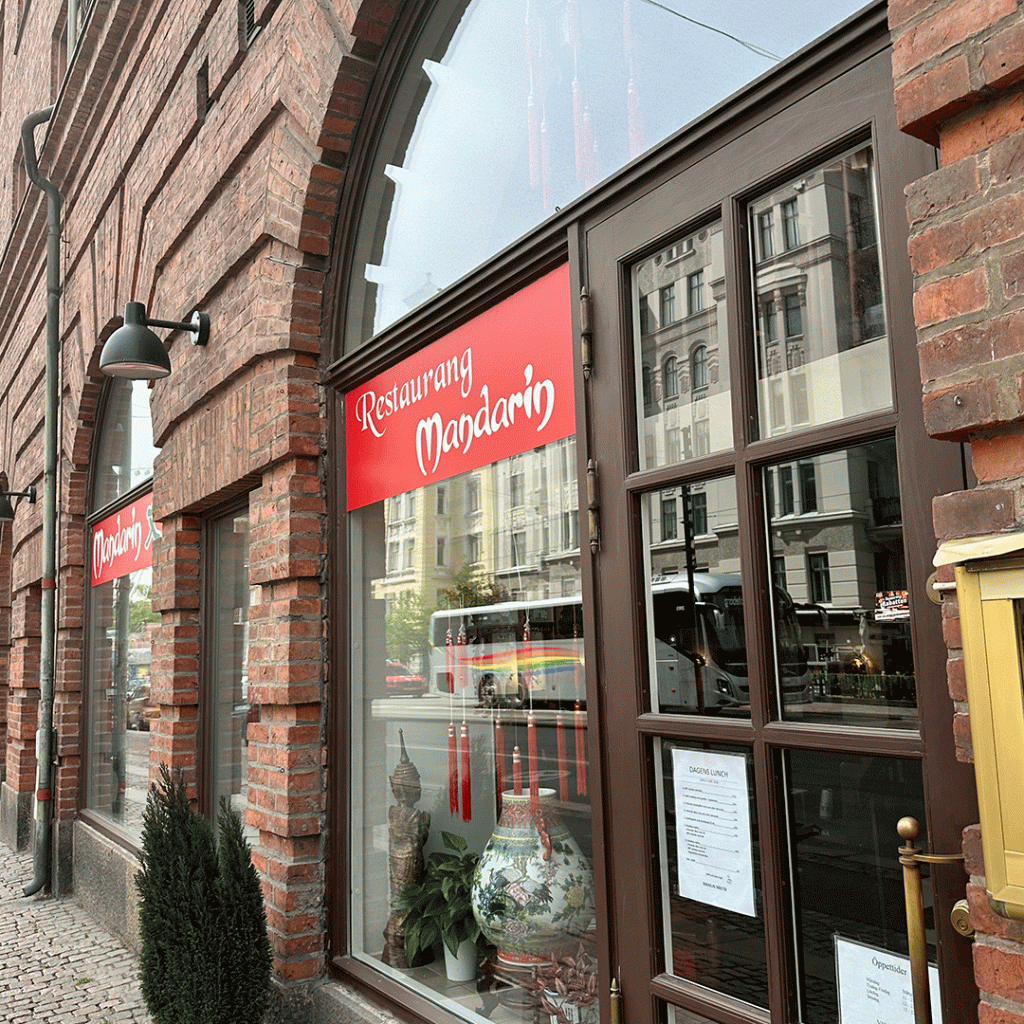
Lately, however, the restaurant has received mixed reviews. On Tripadvisor, it has a rating of 3.5 out of 5 based on 35 reviews, with some folks praising the food and service, while others note inconsistencies. But customers still highlight the generous portions and the restaurant’s traditional atmosphere. Some point out that the restaurant has maintained its classic vibe over the years, adding charm for those seeking a nostalgic dining experience.
Okay, so that could be us. But here’s the thing. We love places like this, and there isn’t a hint of irony about it. One of OtET’s staff took his 12-year-old daughter and (childishly reluctant) wife to eat there. Both hardcore vegetarians, both snobs. Both loved it. Crunchy, savory, and colorful.
All in an atmosphere and interior that screams of homesickness. If we had to set up a shop in a remote province in a strange, faraway place, we’d likely build a miniature version of Gamla Ullevi that only served shellfish, meatballs, and sandwiches, often combined. Our signature sandwich wouldn’t be a Reuben. It would be a Ruben (after Ruben Svensson, the left-leaning right-back from IFK Göteborg and Västra Frölunda). The walls would be covered with IFK jerseys, and there would be life-sized portraits of the Holmgrens on the wall of fame. That would remind us of home.
Indeed, there are so many stories in these Chinese restaurants that eating there is almost painful. How did they start? What’s the founders’ story? What were these places like back then? What do those paintings mean? And when and why did they fall from grace?
Please observe that the classic SCRP restaurants were once fine dining establishments, not lunch joints or shelters for the broken. The interiors recall those days, just like the fact that they’re closed on Mondays (and in some places even Tuesdays, as in the case of Evergreen on Karl Johansgatan).
And now they are all about to disappear. Faced with this, we felt like setting fire to Stadsmuseet. Who’s to say what tasteful treasures have the most significant cultural impact? And what about the social aspect? How many warm meals have these restaurants not provided over the years? It doesn’t get more inclusive than that. In fact, why not tear down the library, too? Why provide several copies of Fifty Shades of Grey while the tre små rätter concept sinks into oblivion? It ain’t fair.
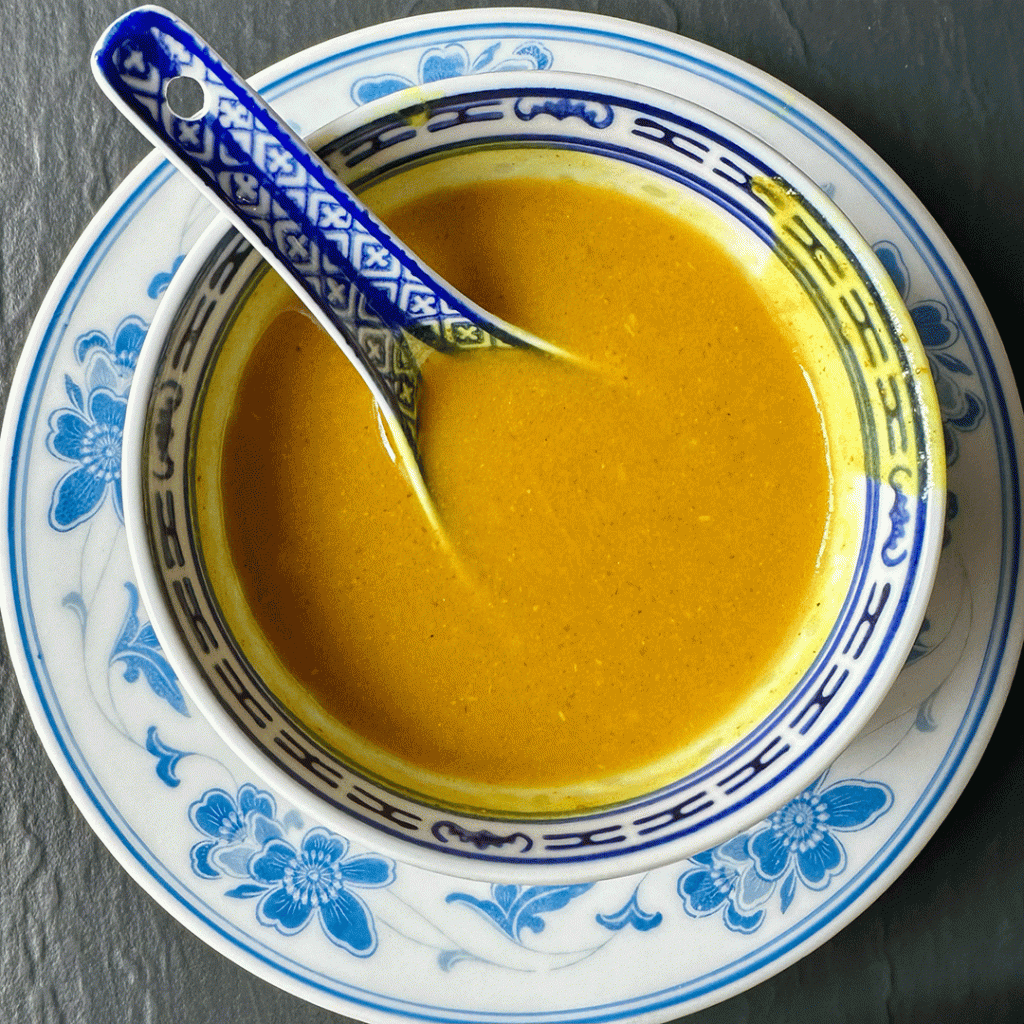
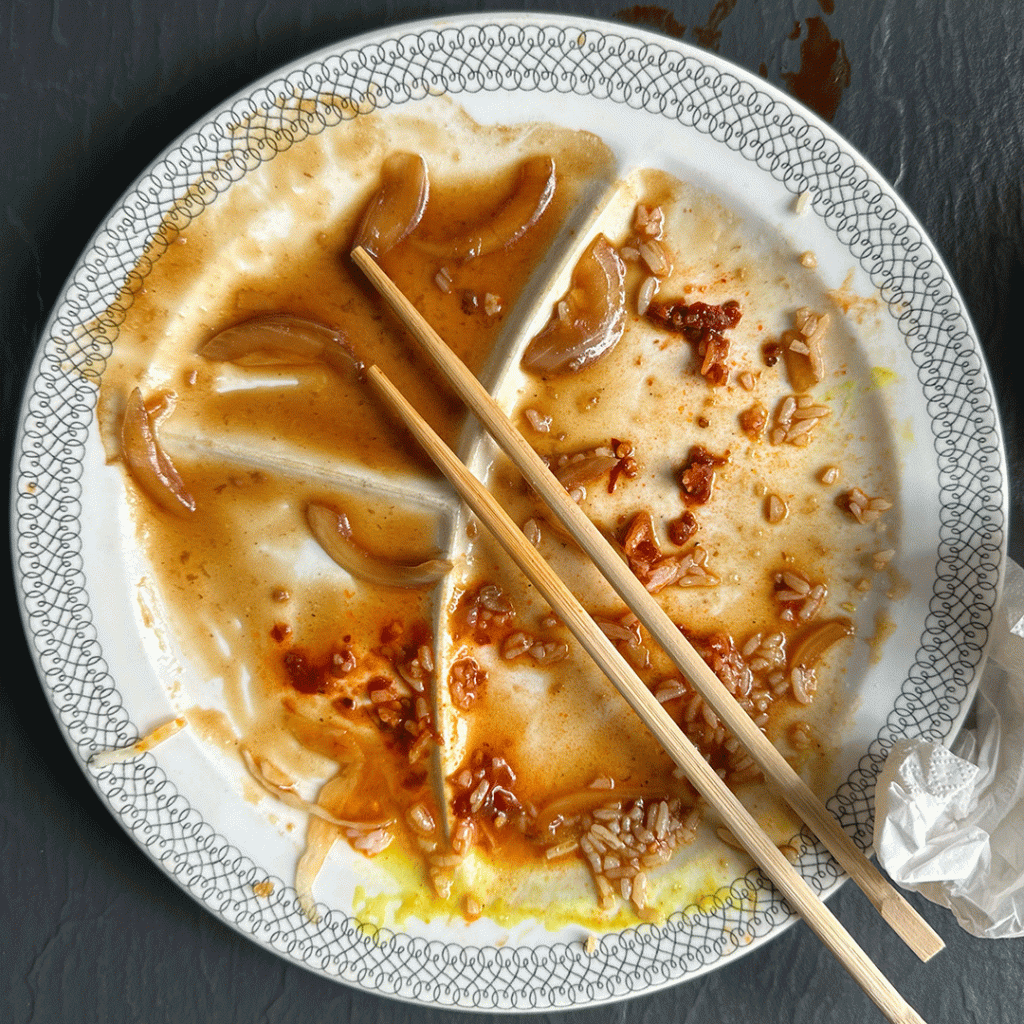
Ok ok, acceptance is an integral part of life; we realize that. But we intend to squeeze whatever we can from these places. And on this particular occasion, we chow down on fried shrimp with curry sauce, rice, and beef with bamboo sprouts. It’s generous and flavorful. The shrimp is crunchy without being overly greasy, the rice is steaming hot, and the curry sauce is perfectly balanced. The beef is tender, with loads of onions.
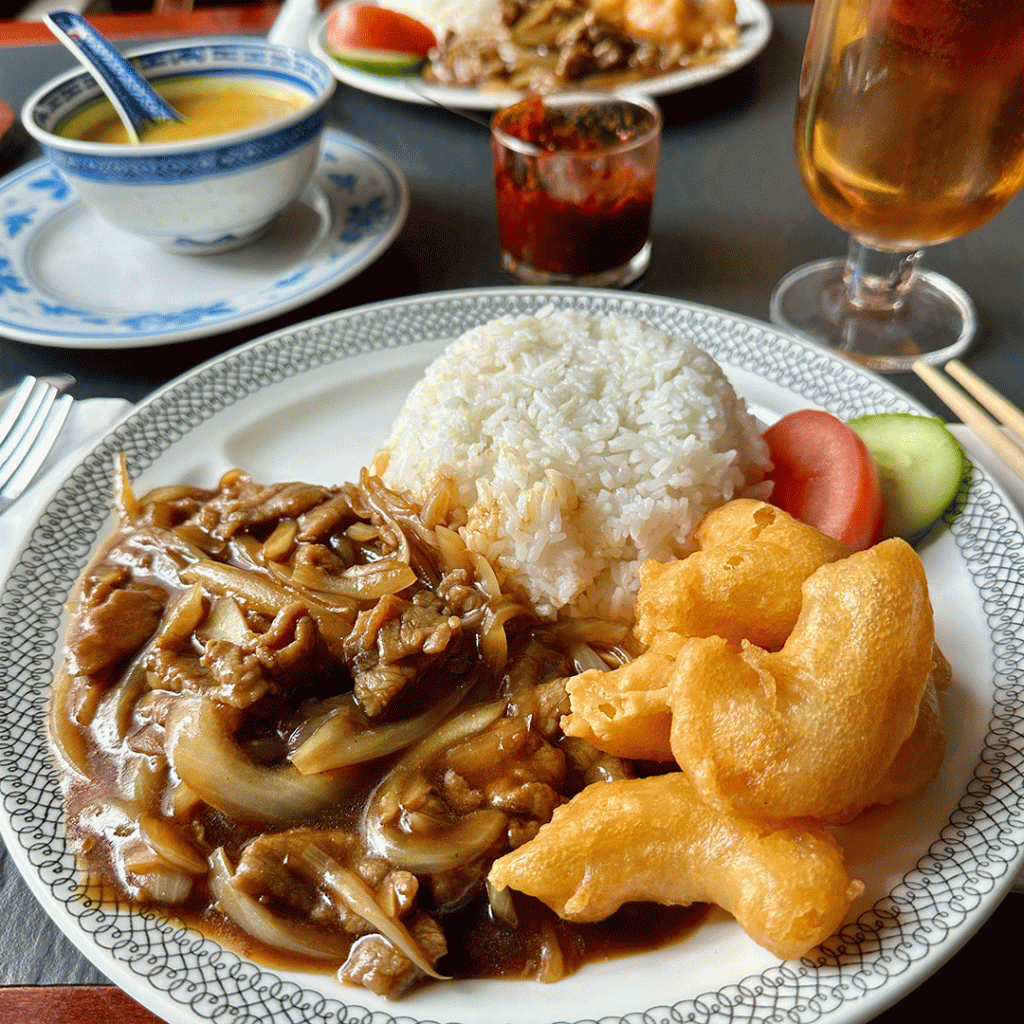
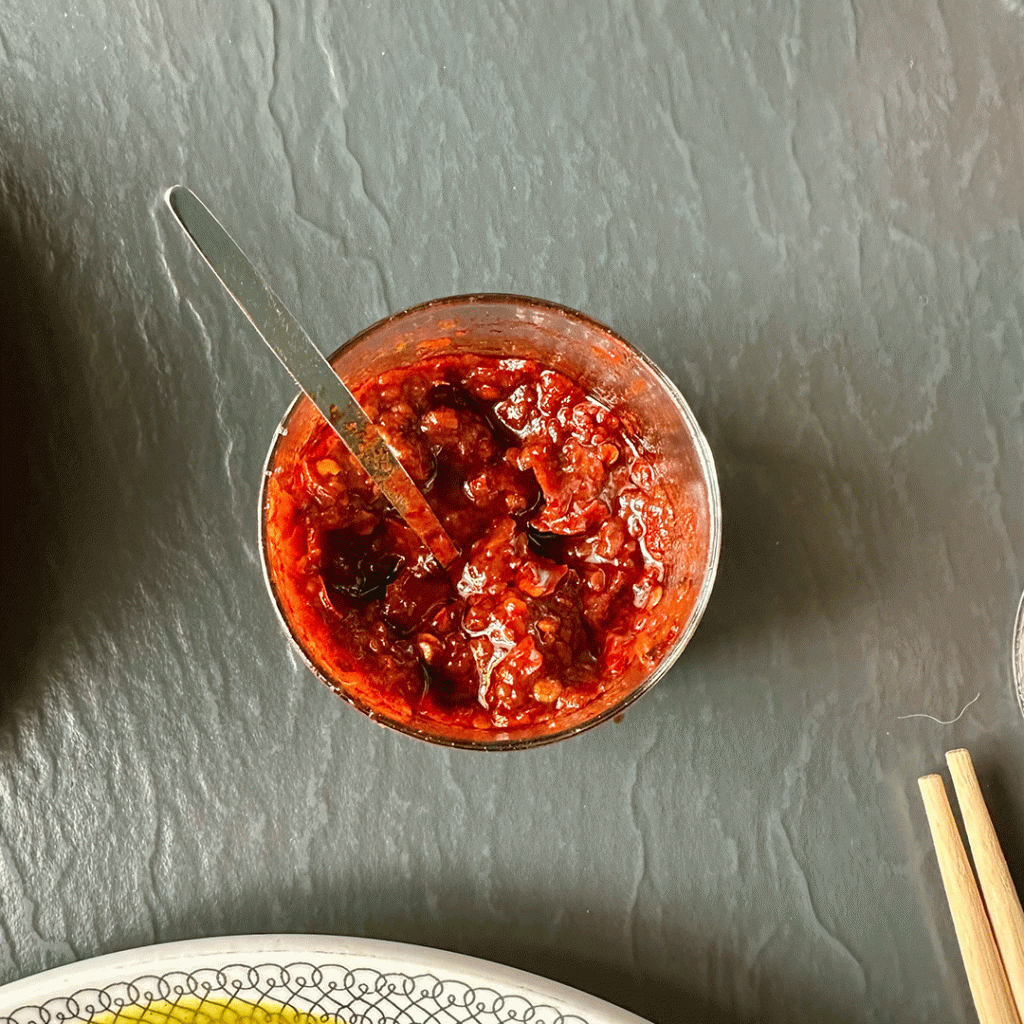
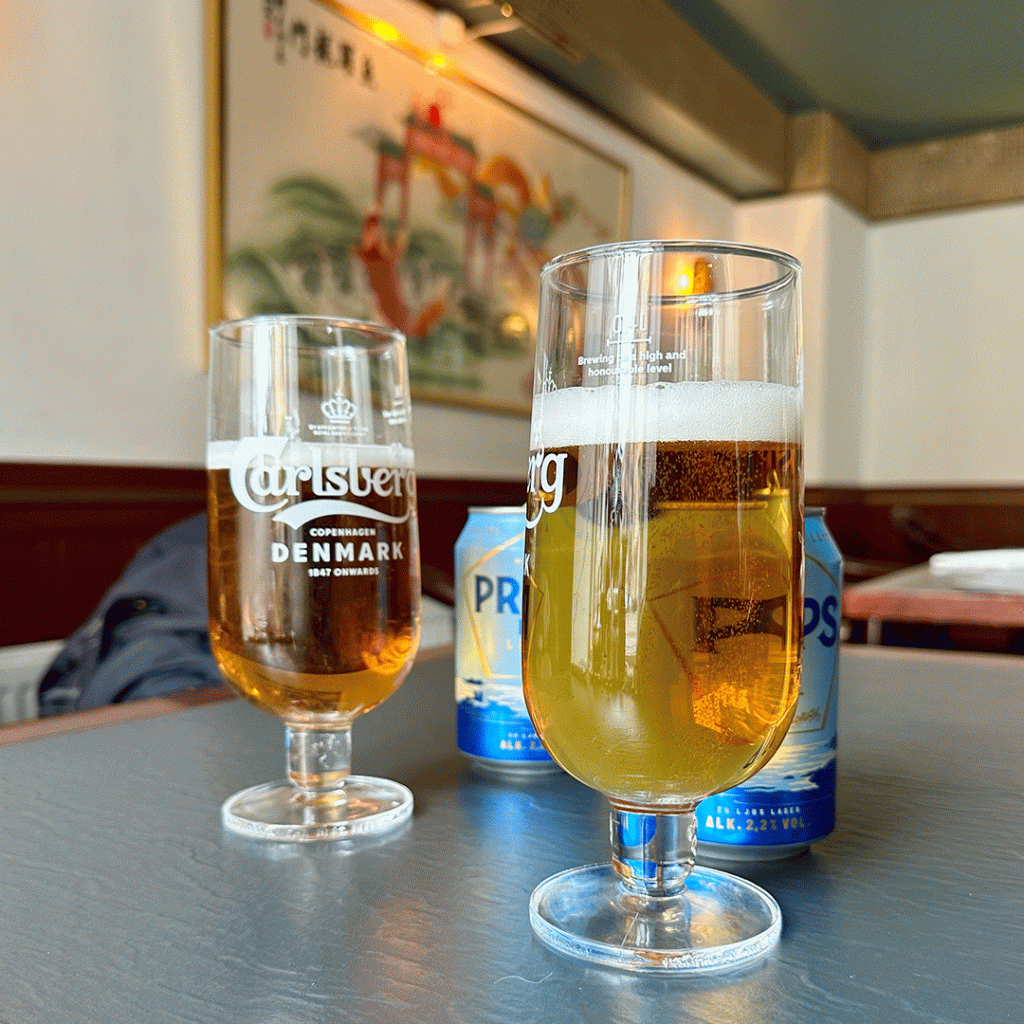
Mandarin offers a choice of two or three (or sometimes four) small dishes, typically what we had today: fried shrimp and beef. A glass of soda or beer was included a year ago, but now they charge 20 SEK for a 33 cl can of light beer. In total, lunch costs 155 SEK. But that’s not Mandarin’s fault; that’s just what eating out has become.
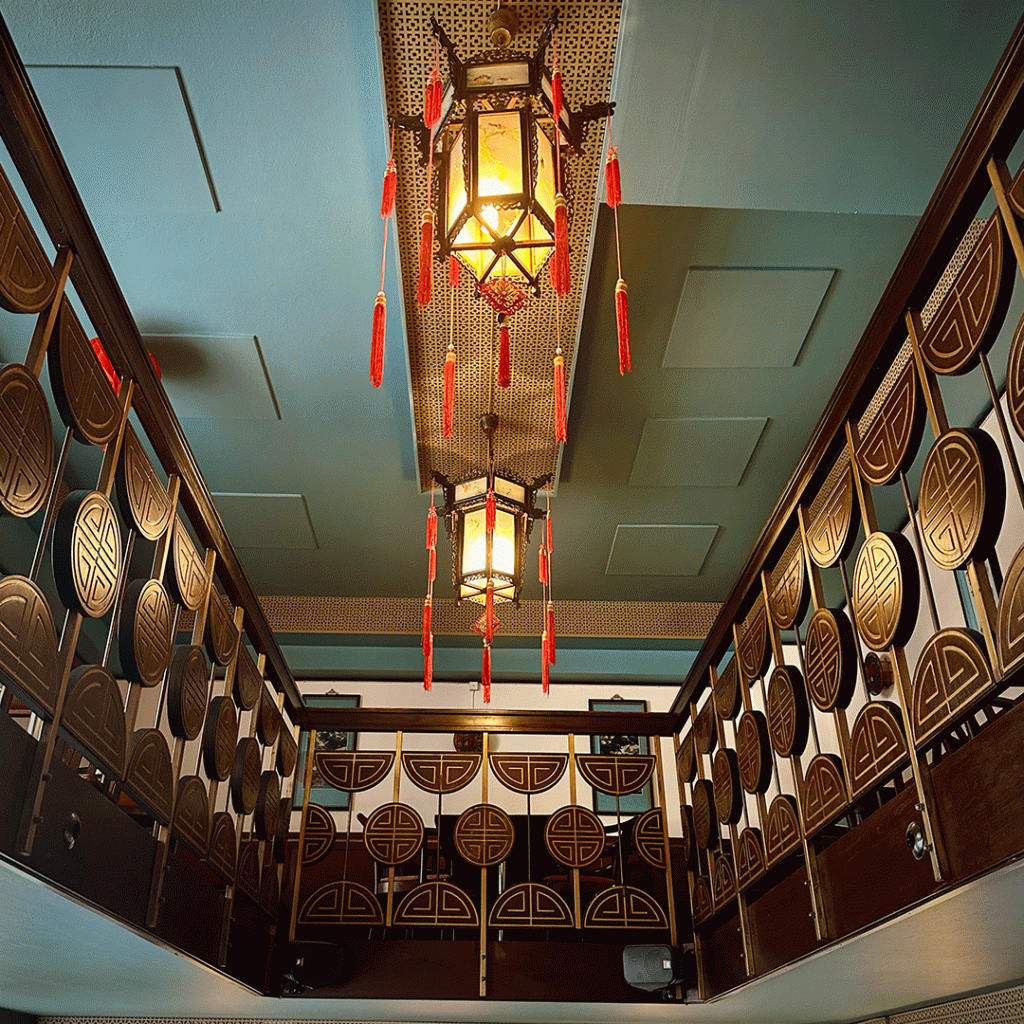
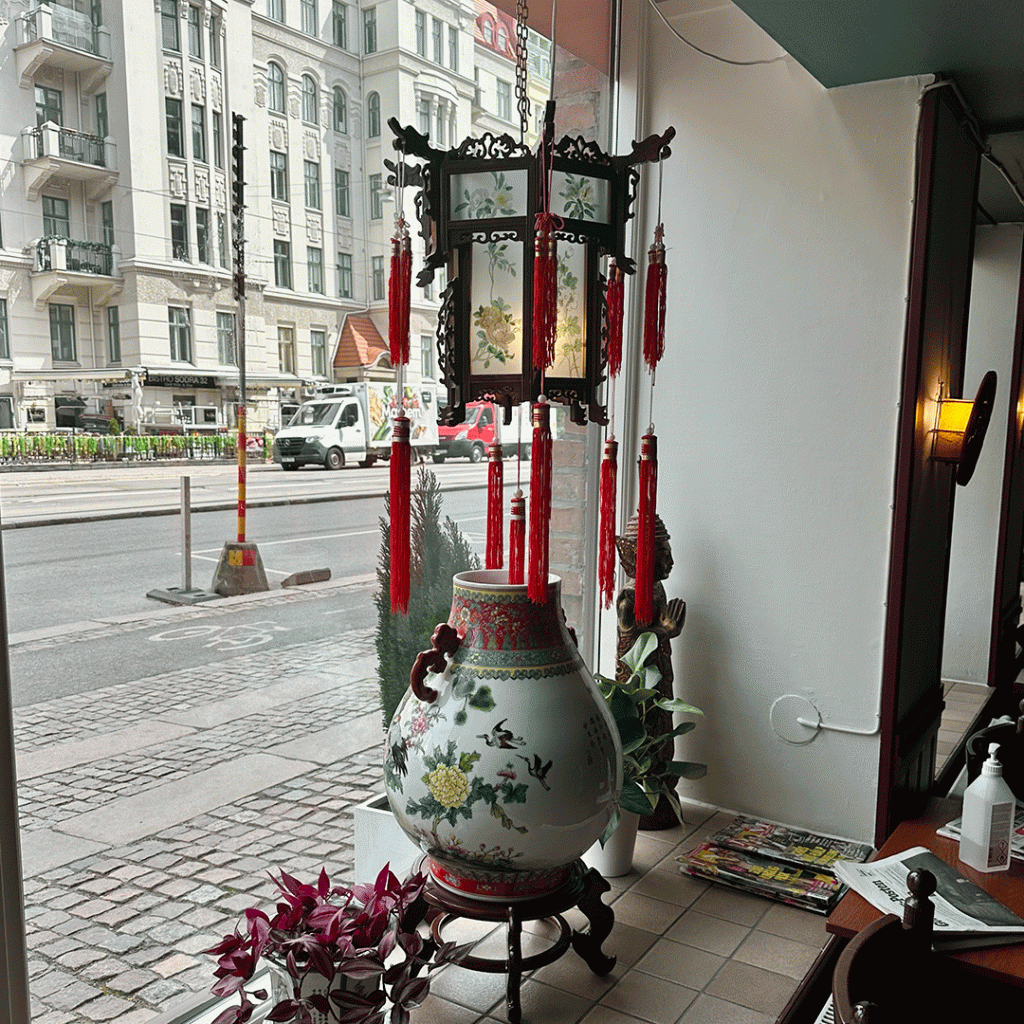
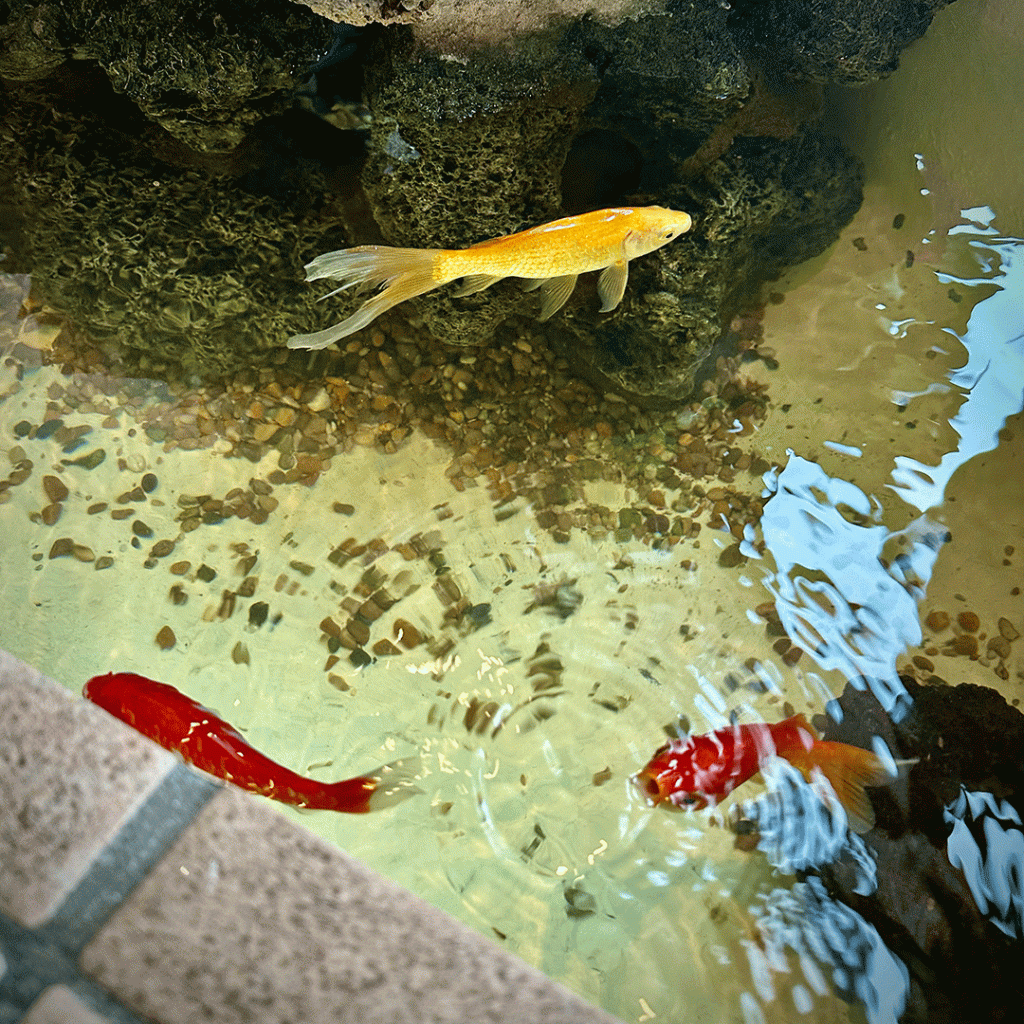
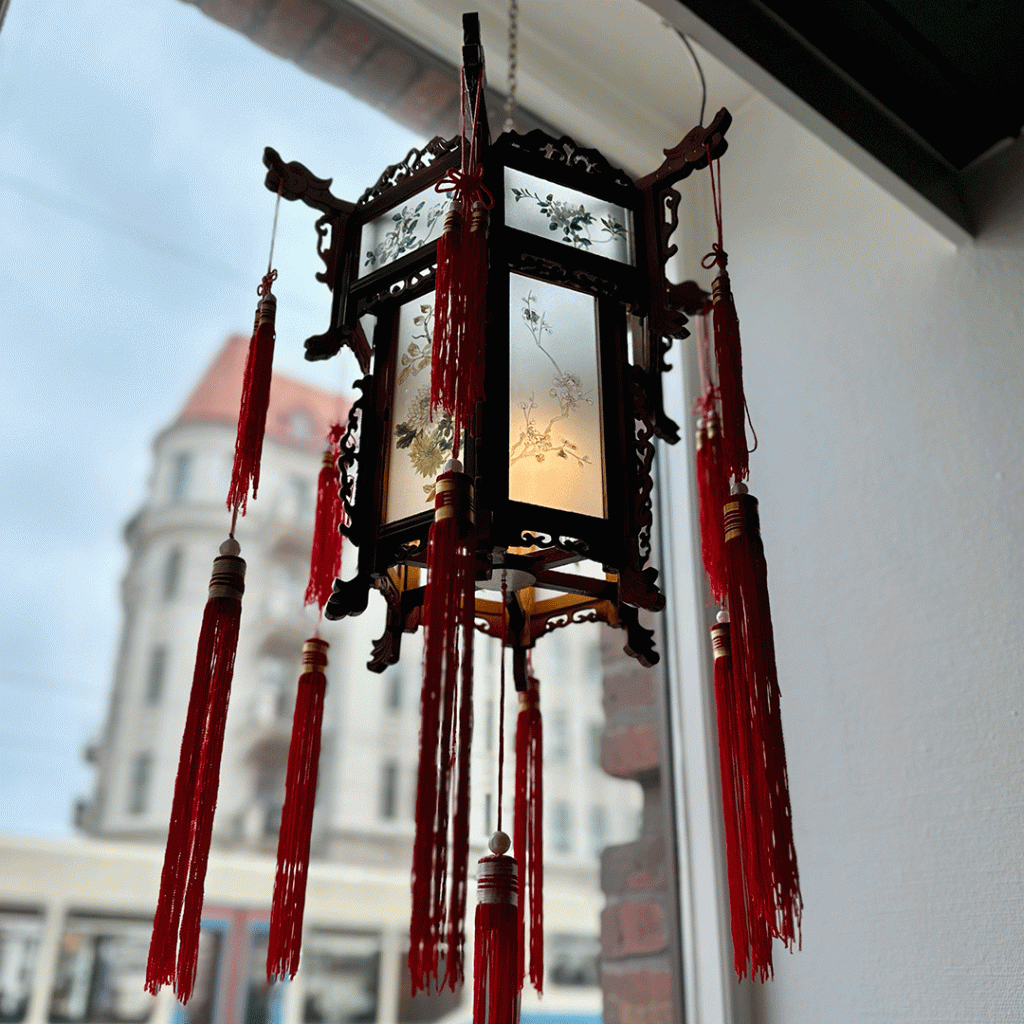
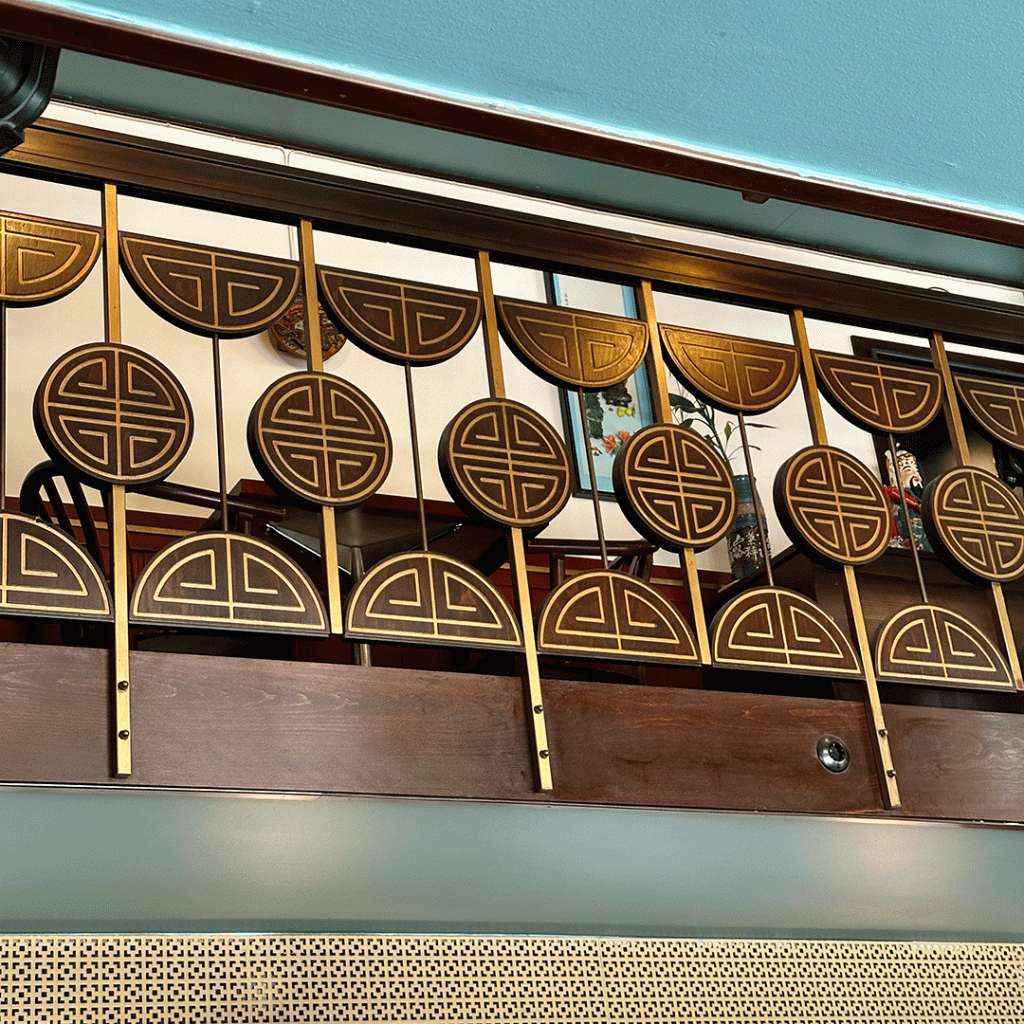
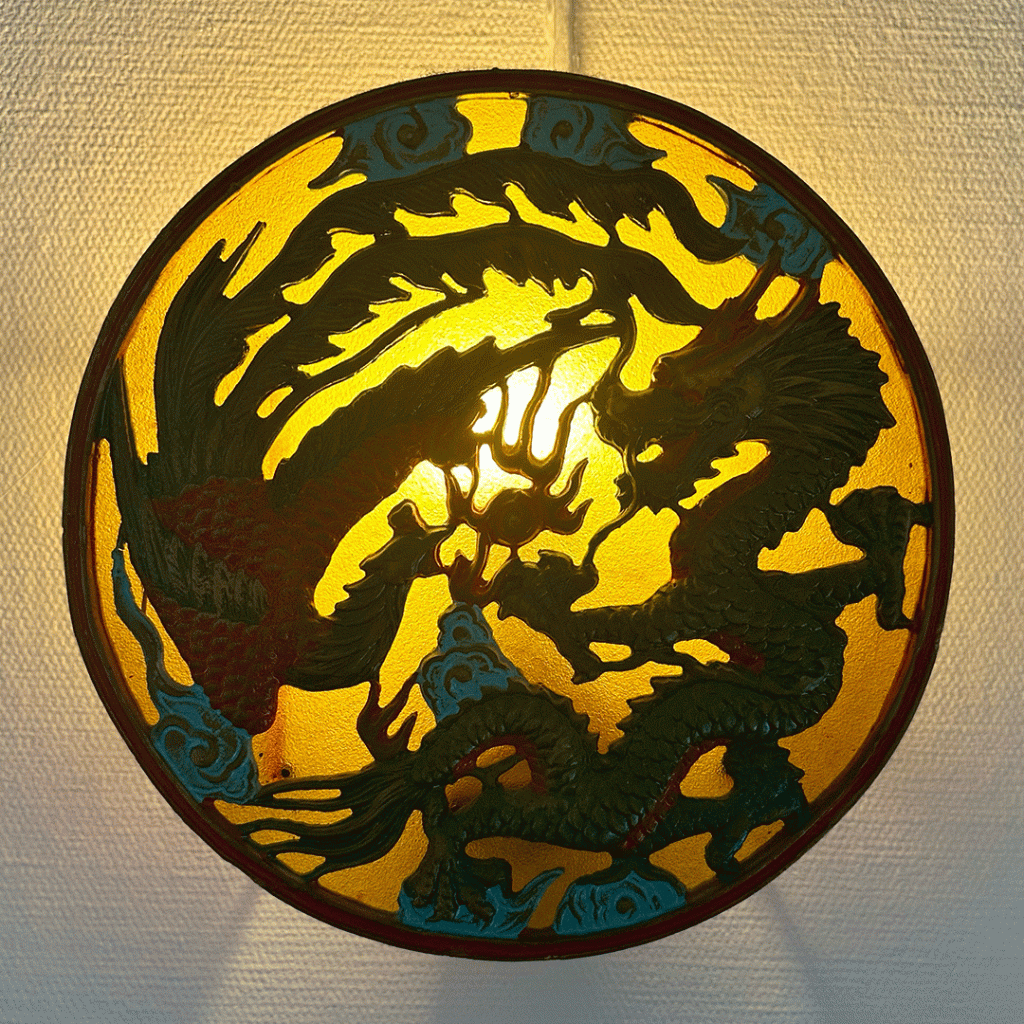
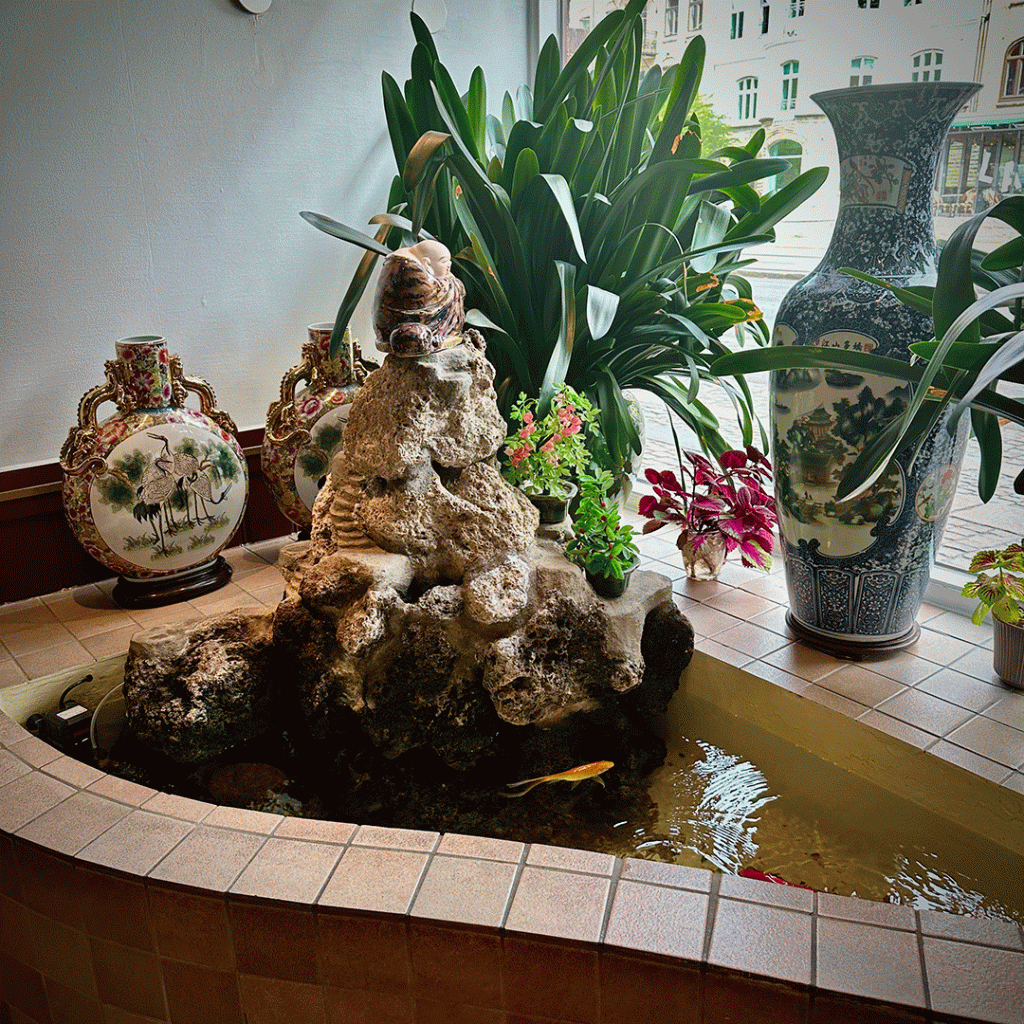
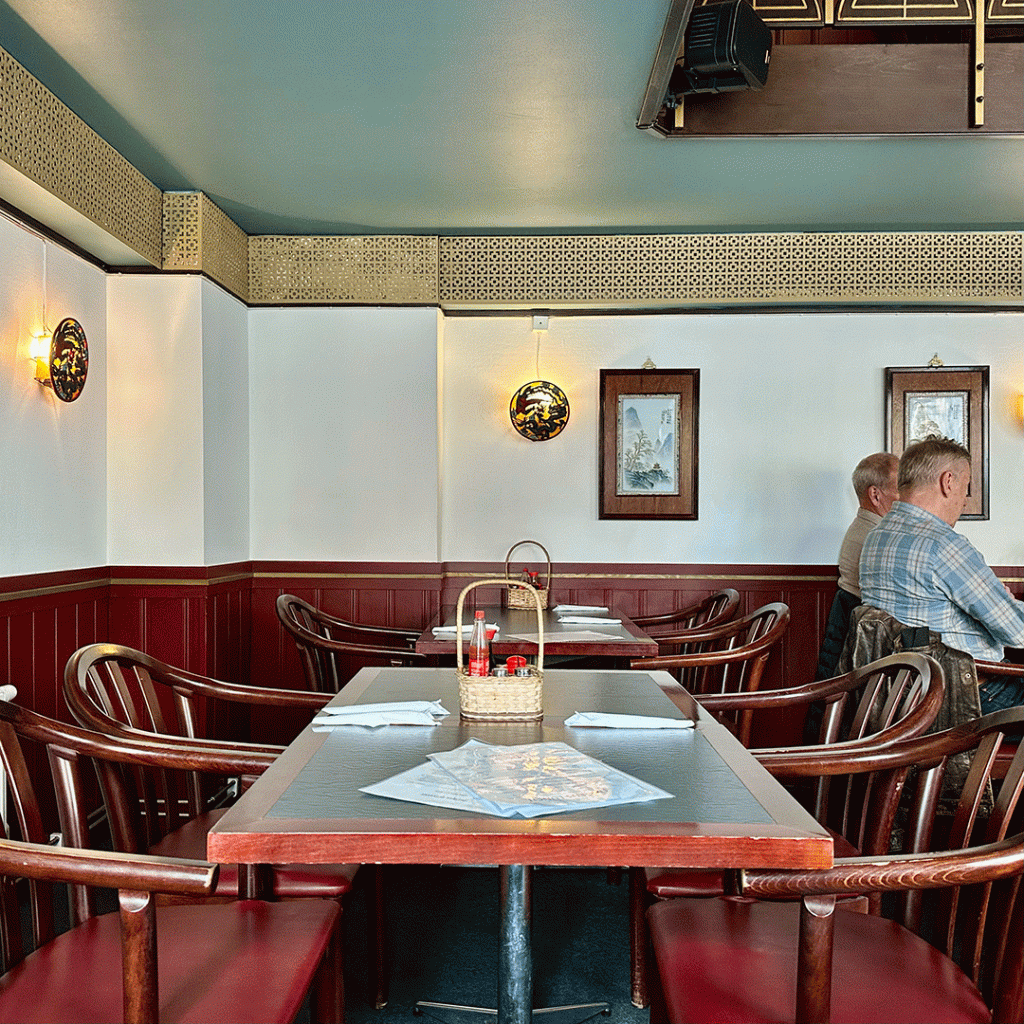
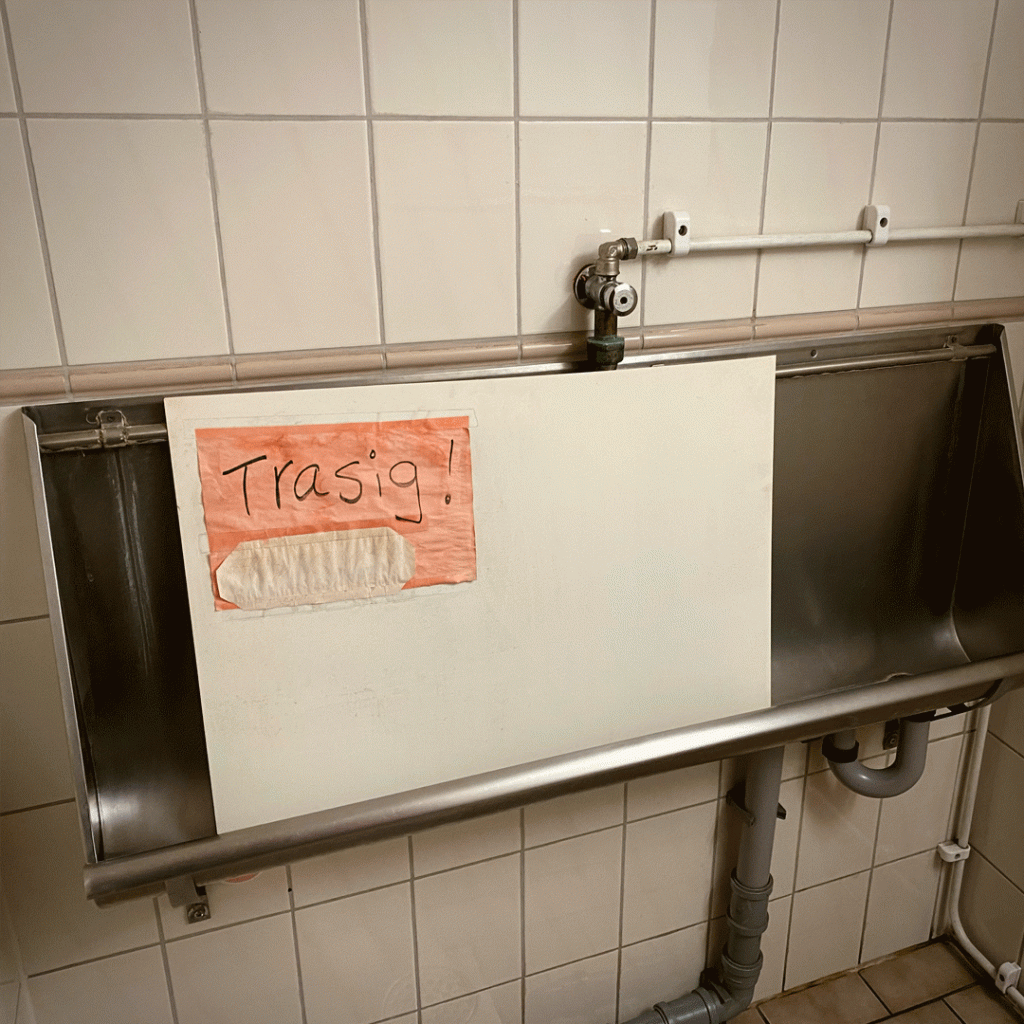
Aside from the food, Mandarin would also be a perfect setting for a movie showdown. The restaurant’s interior is dimly lit, steeped in a warm, timeless glow. Lanterns hang from the ceiling, their skins softly diffusing the light. Along the walls, there are paintings of misty mountains and calligraphy. The upstairs section has a wraparound balcony, giving the whole place a saloon-like feel. To the right of the entrance is a pond of goldfish. You pass it on the way to the toilet, which has been “Trasig!” (Out of order) since 2004. Sometimes, there’s soft music playing in the background. The service is bright and cheery. We’ve eaten there regularly for 25 years, so our faces are familiar.
On this visit, the place triggers memories, and that’s why we start discussing the time when IFK Göteborg defeated Hamburg. In fact, we probably even celebrated the victory in a place like Mandarin. OtET’s editorial manager remembers his father’s glasses fogging over as he bent over the steaming pile of rice. In these restaurants, you could have as many sodas as you liked. You’d have a deep-fried banana with vanilla ice cream for dessert. You’d fall asleep in the car on the way home.
- Name: Mandarin, Södra vägen 51
- Cuisine: Chinese
- Walking distance from Zenseact: 45 minutes (including the ferry); approximately 10 minutes from the home office
- Price: 135 sek (155 with drink)
- Rating: 5 NCAP stars (Norra Älvstranden Culinary Assessment Program)
- Pro tip: If you made it all the way to Södra vägen, have your after-lunch coffee at Tony’s coffee bar across from Svenska Mässan (Skånegatan).
Our children will remember ordering miniature burgers at Pinchos and cooking TikTok pasta. Hopefully, these memories will also be warm and personal, centered around the joy of discovery, community, and shared experiences, just like our trips to places like Mandarin.
So, if you’re reading this, look at the streets and find your Gothenburg 1970s Chinese restaurant. Hasten there, enjoy the food and the atmosphere, and in the words of Manchester Orchestra, close your eyes and breathe that moment down.
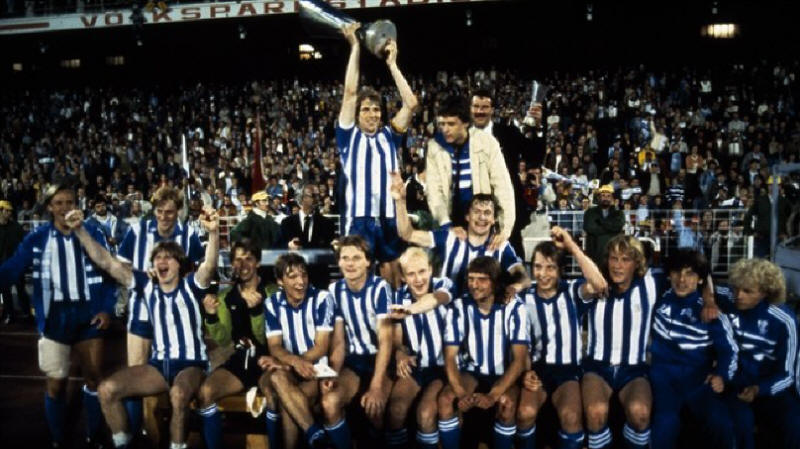
Hopefully, Mandarin will live on to serve food another day. If not, it will stay with us like the UEFA Cup Trophy.




–––
We’ll hopefully return shortly with another review. In the meantime, heed the great Robert Frost’s advice and choose the road less traveled – a wise gastronomic approach and an outstanding professional mantra for every Zenseactian.
–––
* As you already know, the word “soccer” originated in England in the late 19th century as a slang abbreviation of “association football” (from “assoc.”). It was used to distinguish it from other forms like rugby football. Ironically, while the English later dropped “soccer” in favor of “football,” countries where different types of football (like American or Australian rules) were more dominant kept using “soccer” to avoid confusion.
**Fluortanter, were dental hygienists (“fluoride ladies”) who visited Swedish schools from the 1960s to the 1990s to promote dental health. They gave children fluoride mouth rinses and taught them how to brush their teeth properly – part of a national effort to reduce tooth decay.
***Korvkiosker were/are small street food stands or kiosks in Sweden that mainly sell sausages or hot dogs. They became popular in the mid-20th century and are part of Swedish fast-food culture. The hot dogs often come with different toppings and sides like mashed potatoes or shrimp salad.
Both fluortanter and korvkiosker are iconic in Swedish cultural history.
 Off the eaten track