“Whatever you do, don’t eat the skin.”
After some finger-wagging, our colleague finally sits down. She sips her coffee and stares out the window until her thoughts settle on one final piece of advice. “And if you put anything but sweet mustard on,” she says, tracing her finger slowly along the rim of her cup, “well – don’t.”
Off the Eaten Track has been places. We’ve traveled the world and enjoyed our share of local specialties. We’ve learned how to adapt to local customs, ask for advice, behave politely, and eat what we’re served. Crocodile, emu, snails, snake, carbonara – we’ve partaken in whatever our hosts have provided. At one point, we even had a handful of witchetty grub (large, white, wood-eating larvae). And here some uppity engineer instructs us how to eat sausage. Pathetic.
Then again, when you go to Bavaria, you don’t want to mess it up. After all, we had prepared extensively for our trip to Munich, where a bunch of our deep learning colleagues reside. We even researched the city’s history. To understand what Munich is all about, you have to go back – way back. Back to monks, bridges, and beer.
The story goes a little like this:
Long ago, in the heart of Bavaria, a group of Benedictine monks settled beside the River Isar. They wore autumn-colored robes and brewed ale, tended fields, and prayed. Travelers came to their monastery for shelter, warmth, and the tasty beer.
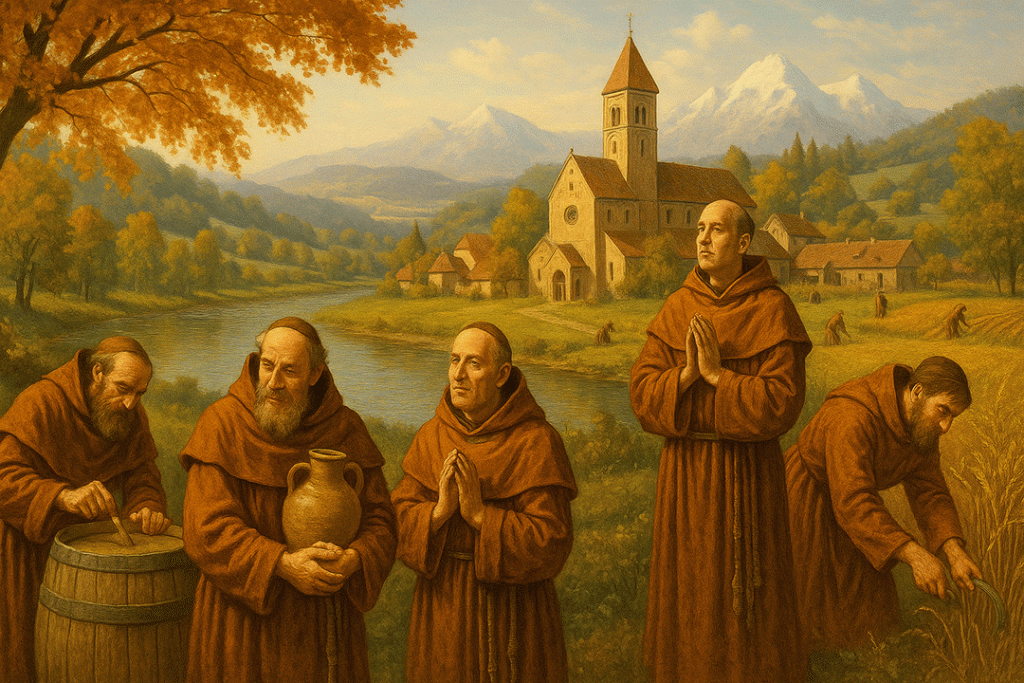
One day, a rich and famous man named Henry the Lion arrived. He was a duke. He saw the monks’ bridge across the river, cleverly placed to lure exhausted merchants off the trade route. “Inspired” by the delicious brew, Henry declared, “Here shall be a market town and it shall be safe, strong, and blessed by monks,” because that’s what rich dudes did back then.
So, in the year 1158, with the endorsement of a tipsy nobleman, Munichen – “by the monks” – was born.
The town grew and grew around the monks’ monastery, its streets echoing with the clatter of carts, the songs of craftsmen, and the chimes of church bells. Over the centuries, Munich flourished, always remembering the monks whose simple and natural life created a city.
Today, however, the Tolkien vibe is gone. Munich is no longer a pastoral paradise where well-rounded fellows with a healthy glow on their cheeks and freshly pressed robes stroll around in comfy sandals, half-drunk and harvesting hops.
Nein. The Shire is dead. Today, Munich, the science, tech and automotive capital of Europe, is a big, loud, shiny machine. According to Wikipedia, the metropolitan area has around 3 million inhabitants, and the broader Munich Metropolitan Region is home to about 6.2 million people.
And with its influx of money comes an exceedingly high standard of living; in 2018, Munich was ranked third in the world (and first in Germany). Consequently, it’s also the most expensive city in Germany.
One thing that remains from the days of Bruder Adalbert (or, perhaps, Frater Albertus, if they used their fancy names during the duke’s visit) and his band of merry alcoholics is, at any rate, the beer. Munich is, of course, known for its beer festival, Oktoberfest, which began in 1810 as a royal wedding celebration. Today, it’s the world’s largest beer festival, attracting over 6 million visitors annually. Munich is home to many breweries and beer gardens, including the Hofbräuhaus, founded in 1589, which is one of the oldest beer halls in the world.
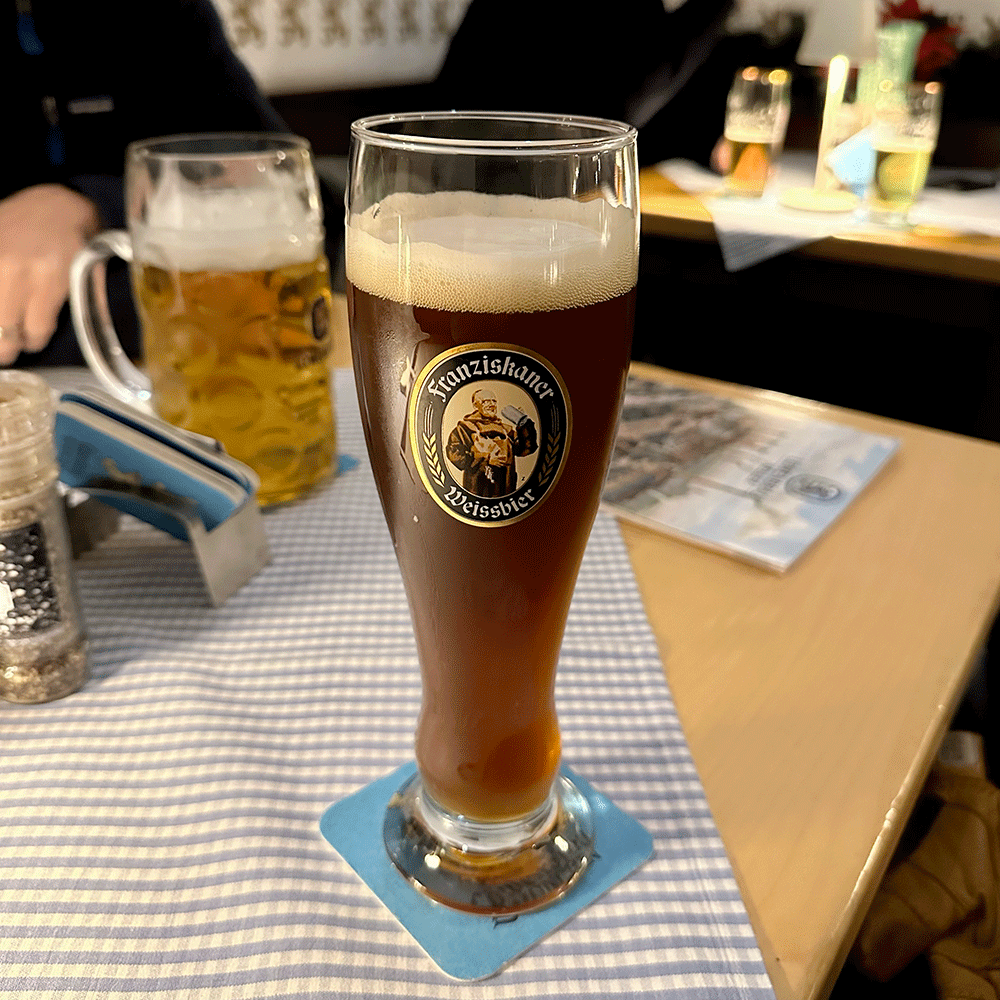
The beer culture is anchored in Munich’s six traditional breweries: Augustiner, Hofbräu, Löwenbräu, Paulaner, Spaten-Franziskaner, and Hacker-Pschorr. These historic works are the only ones allowed to serve beer at Oktoberfest and must brew within the city limits. But the city also boasts well over 60 smaller breweries, including craft brewers and brewpubs, redefining what Munich beer can be.
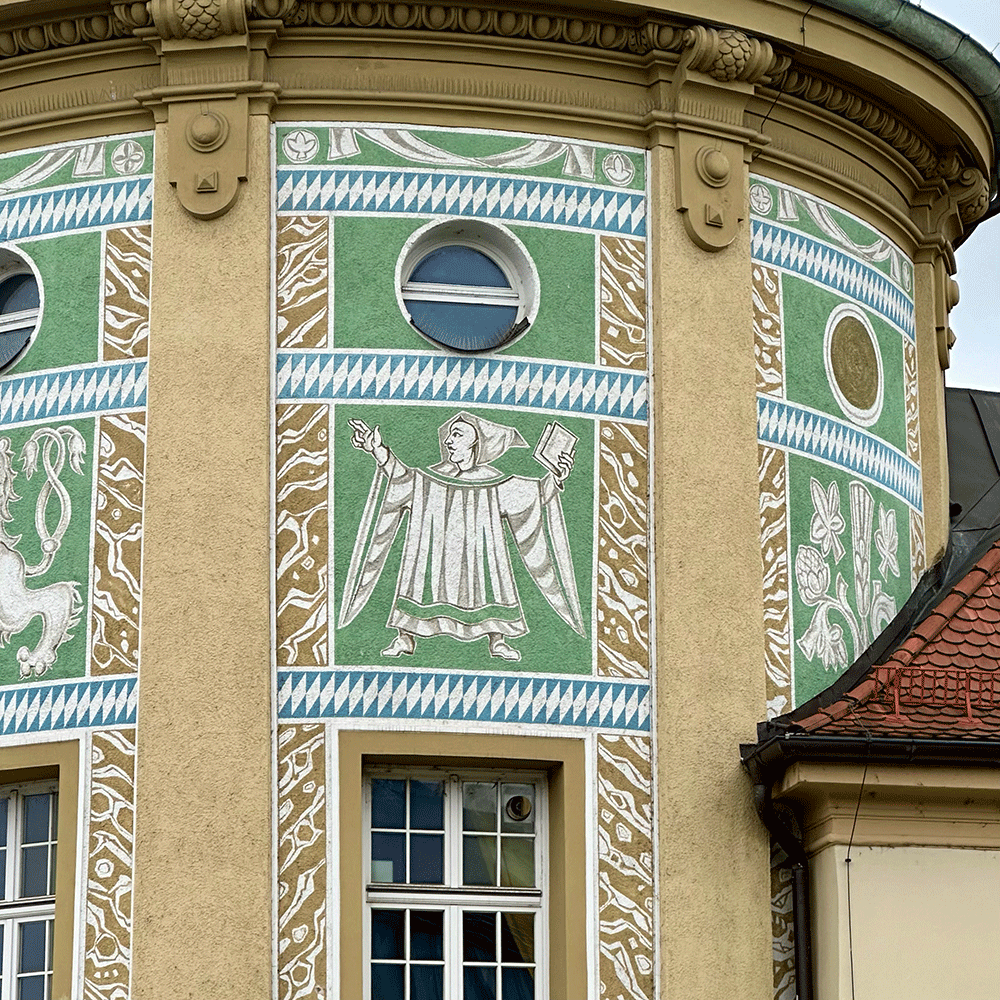
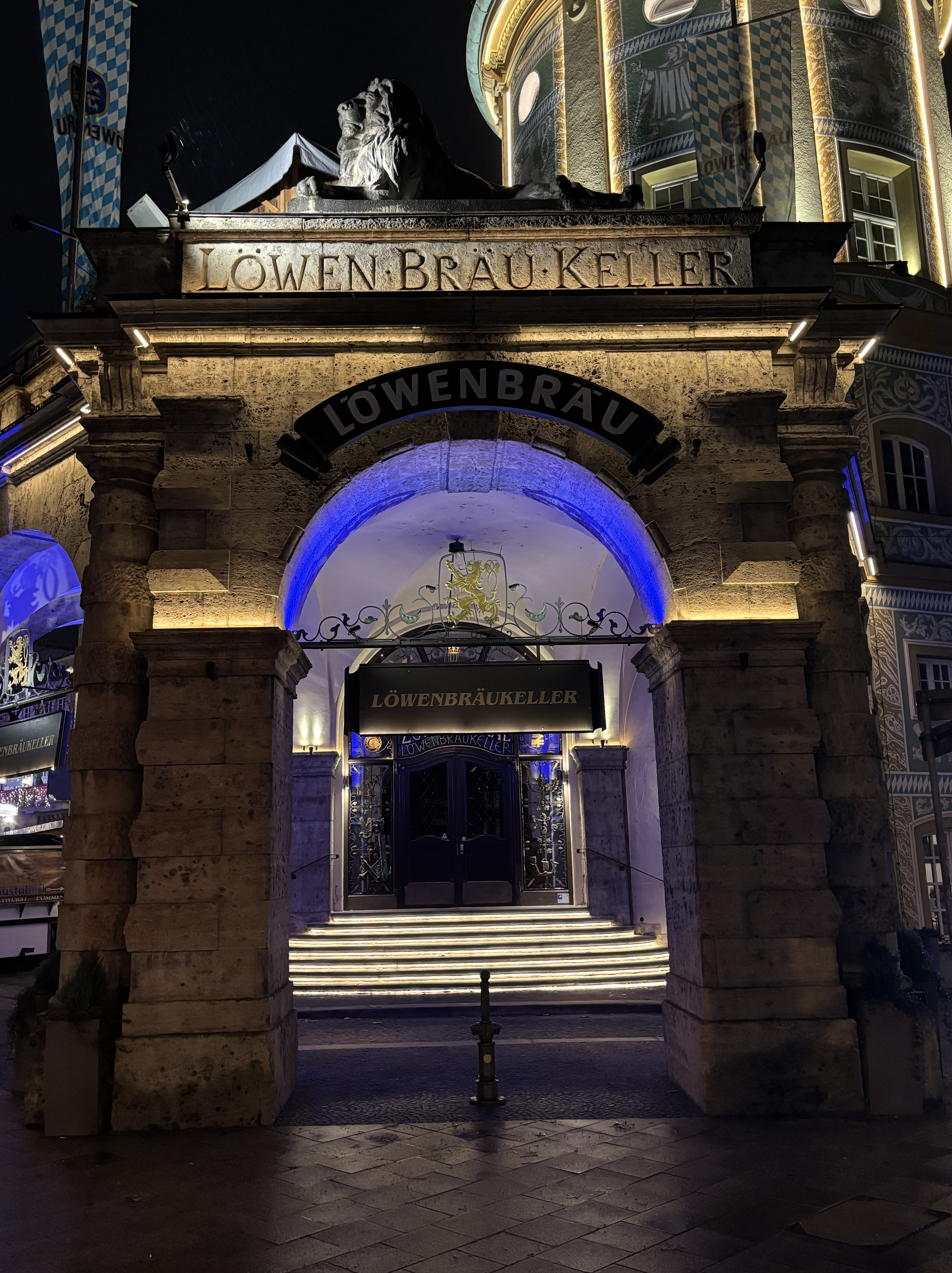
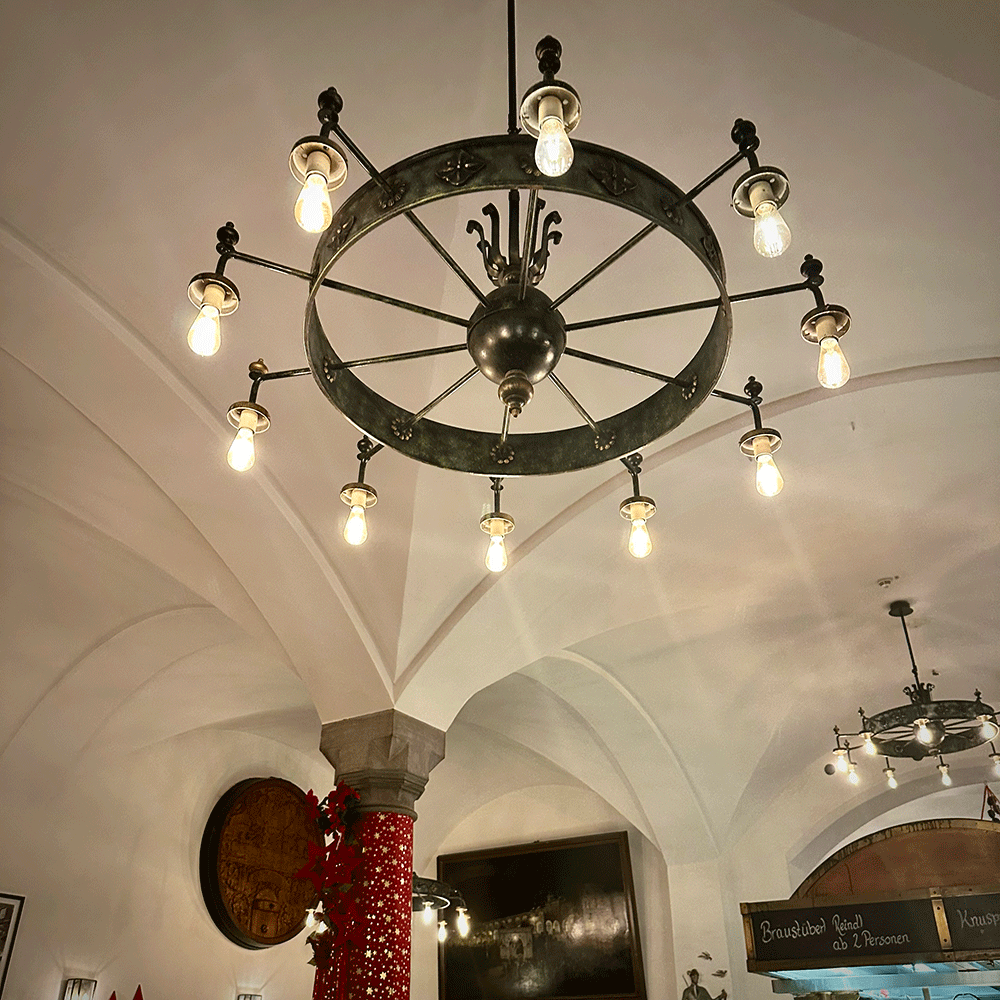
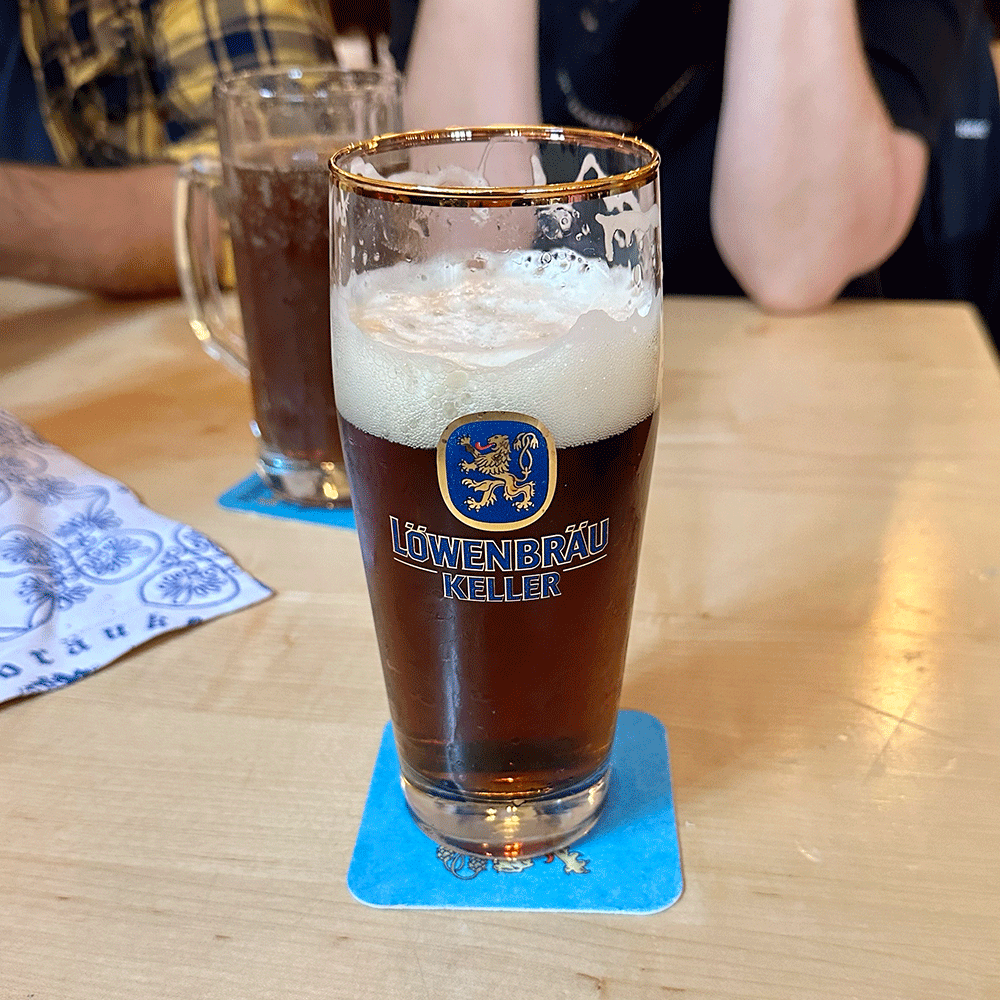
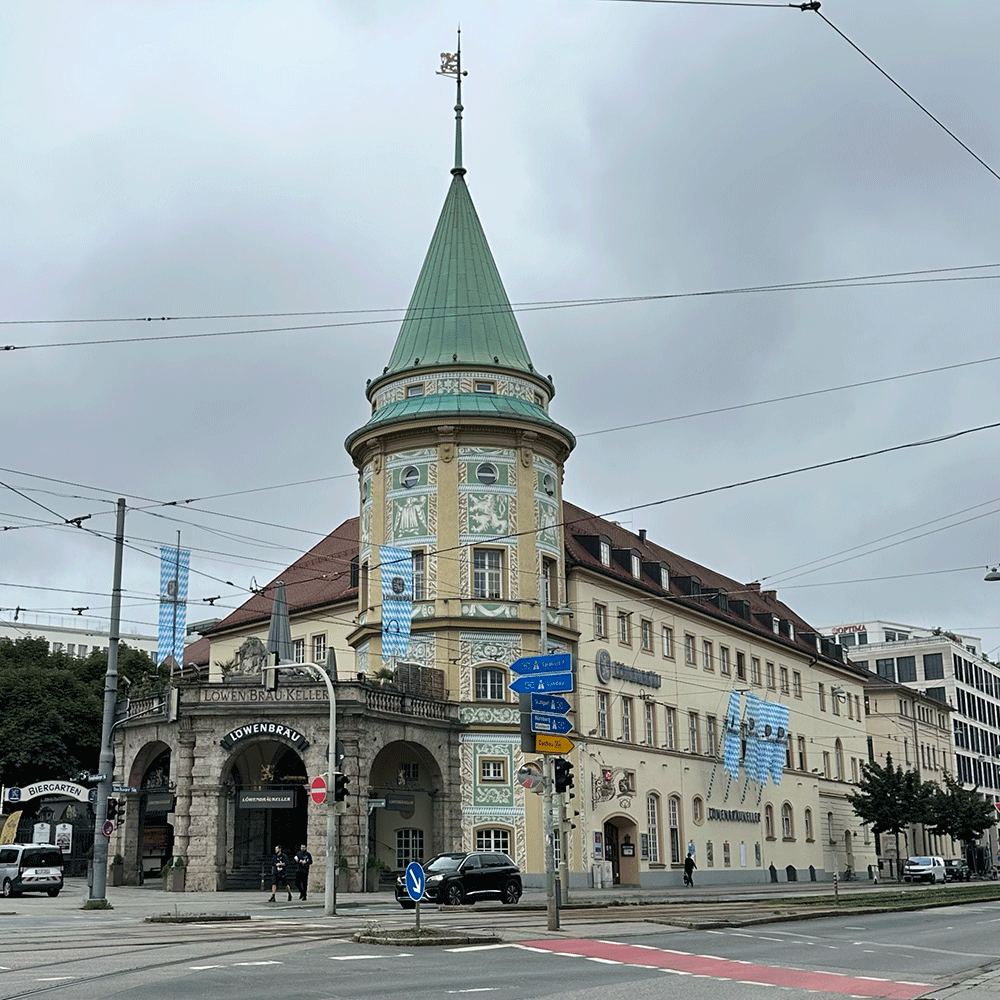
On our visit, however, we opted for the traditional approach. After spending a day in the office, we went to Löwenbräukeller. What ultimately convinced us was the seductive view from the office (left, below). Yes, the Keller is right across the street.
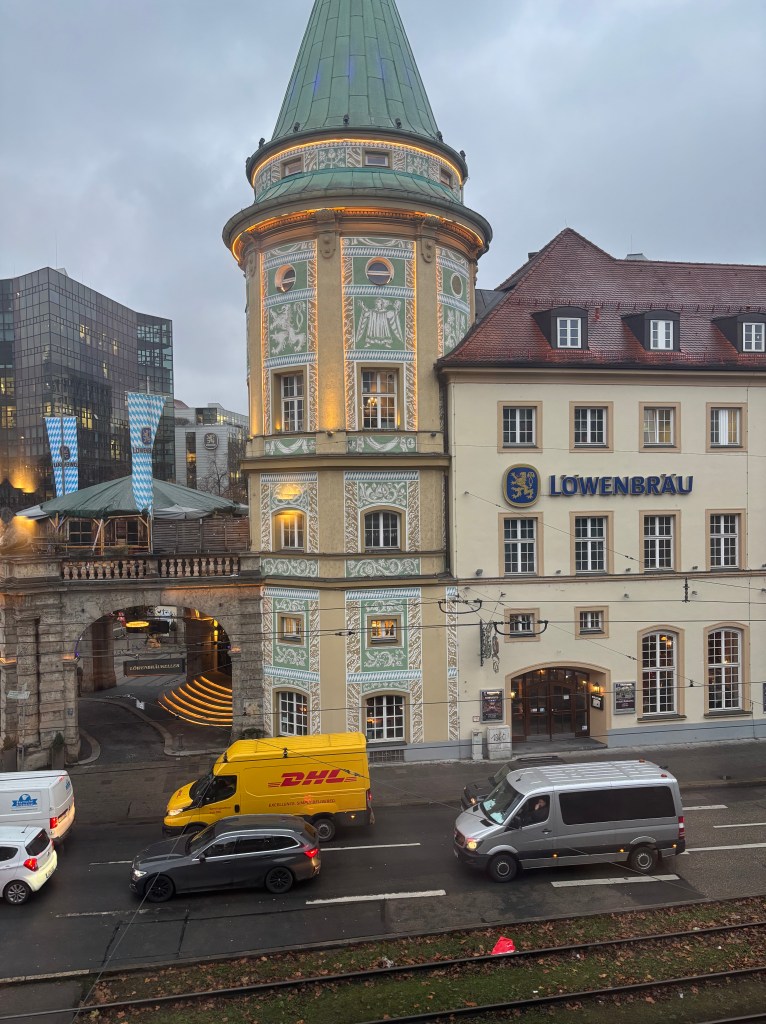
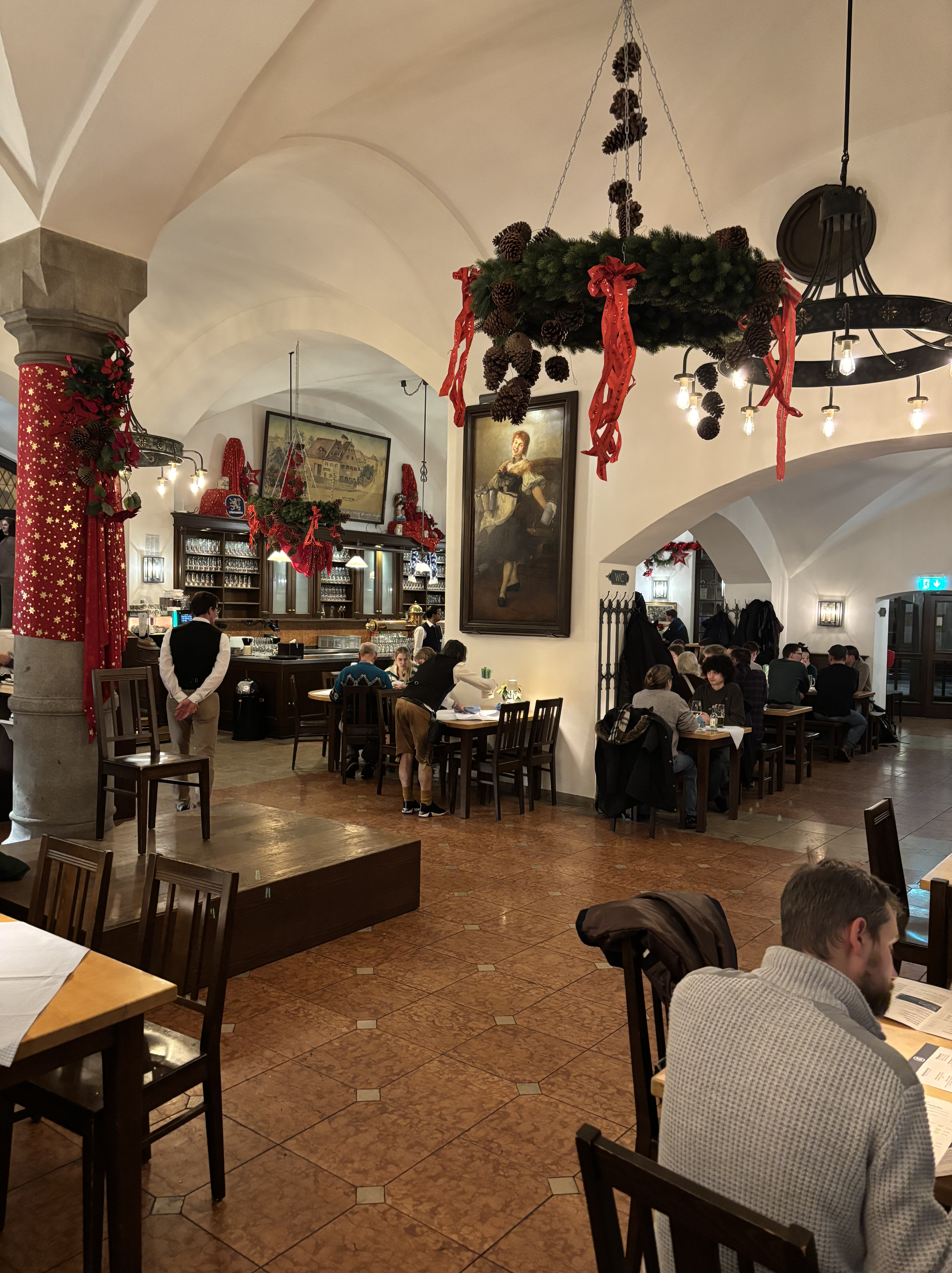
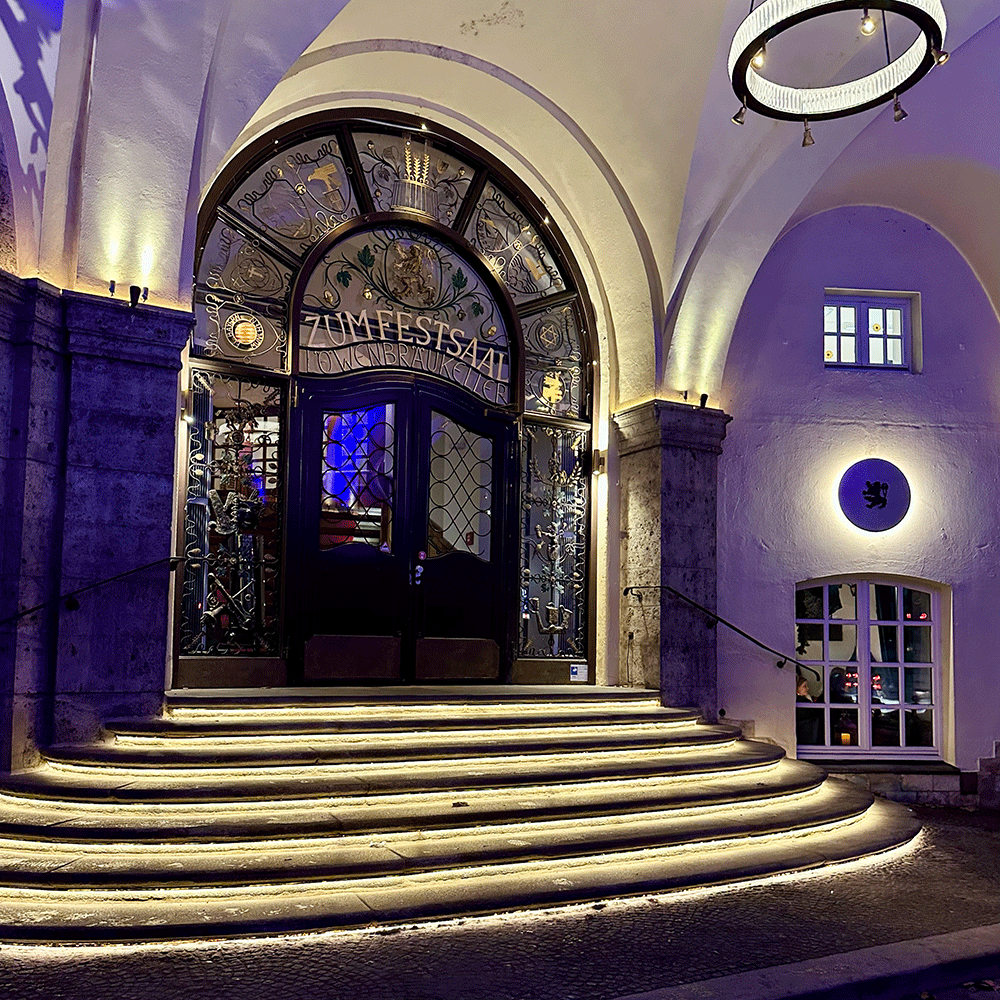
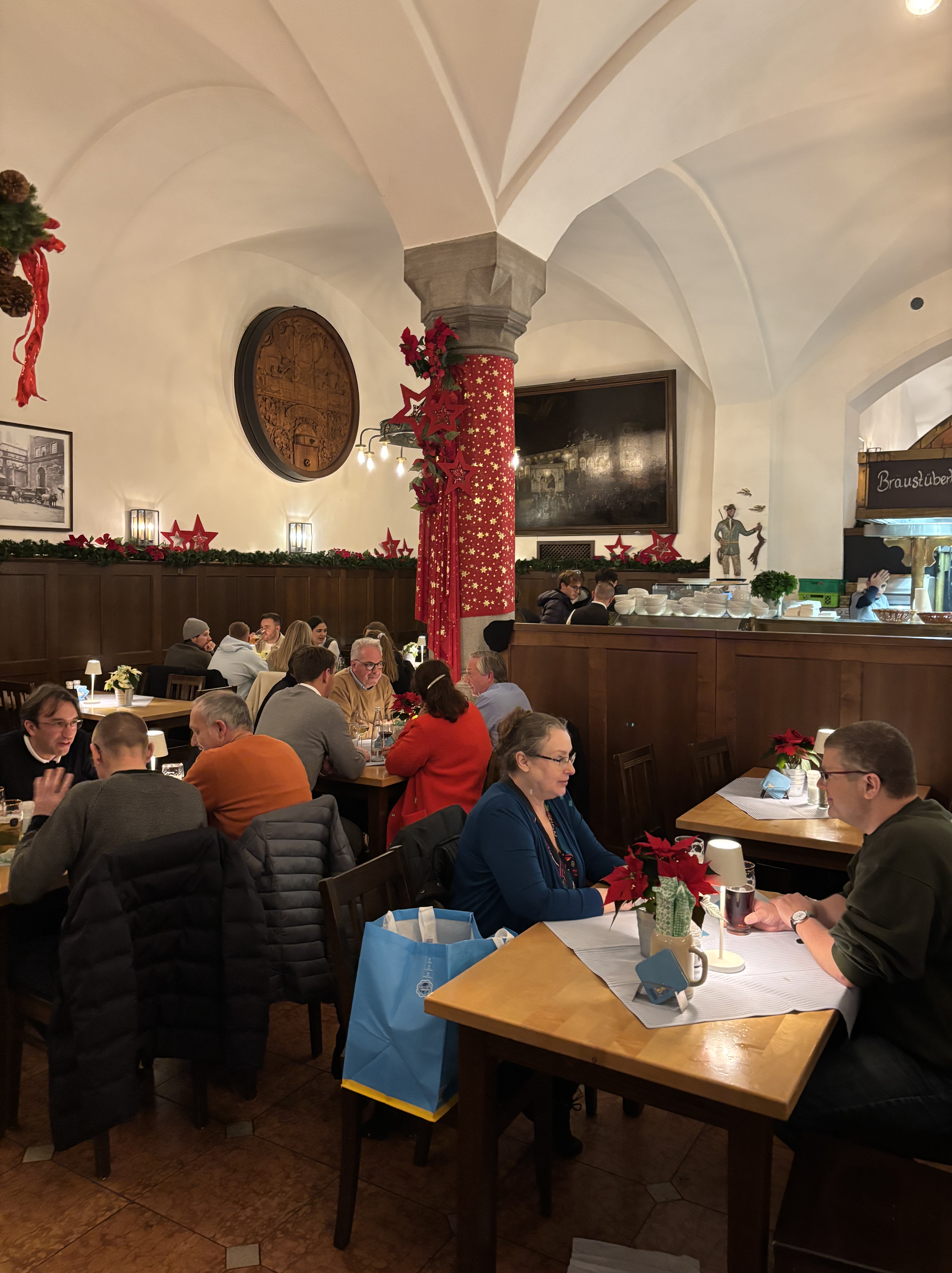
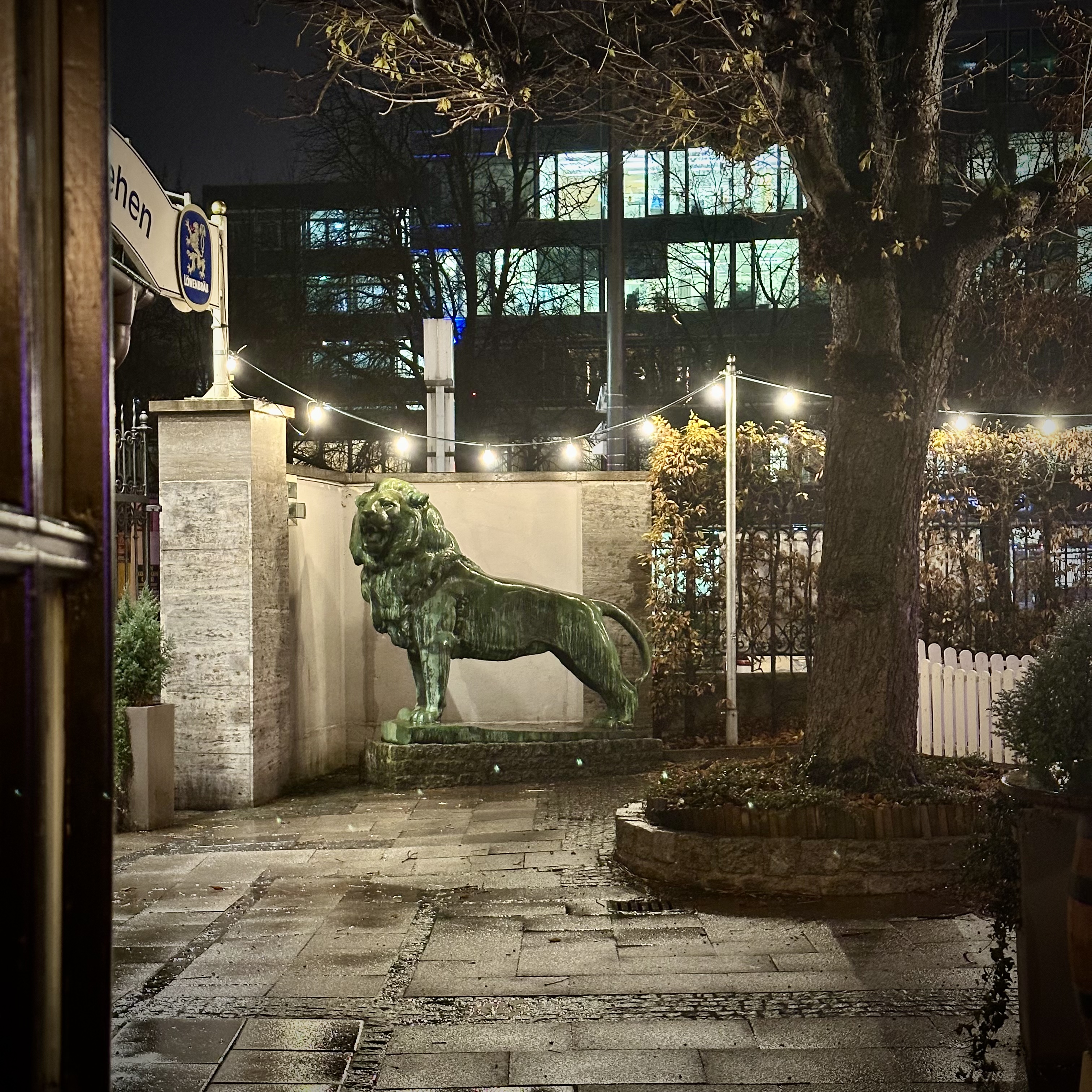
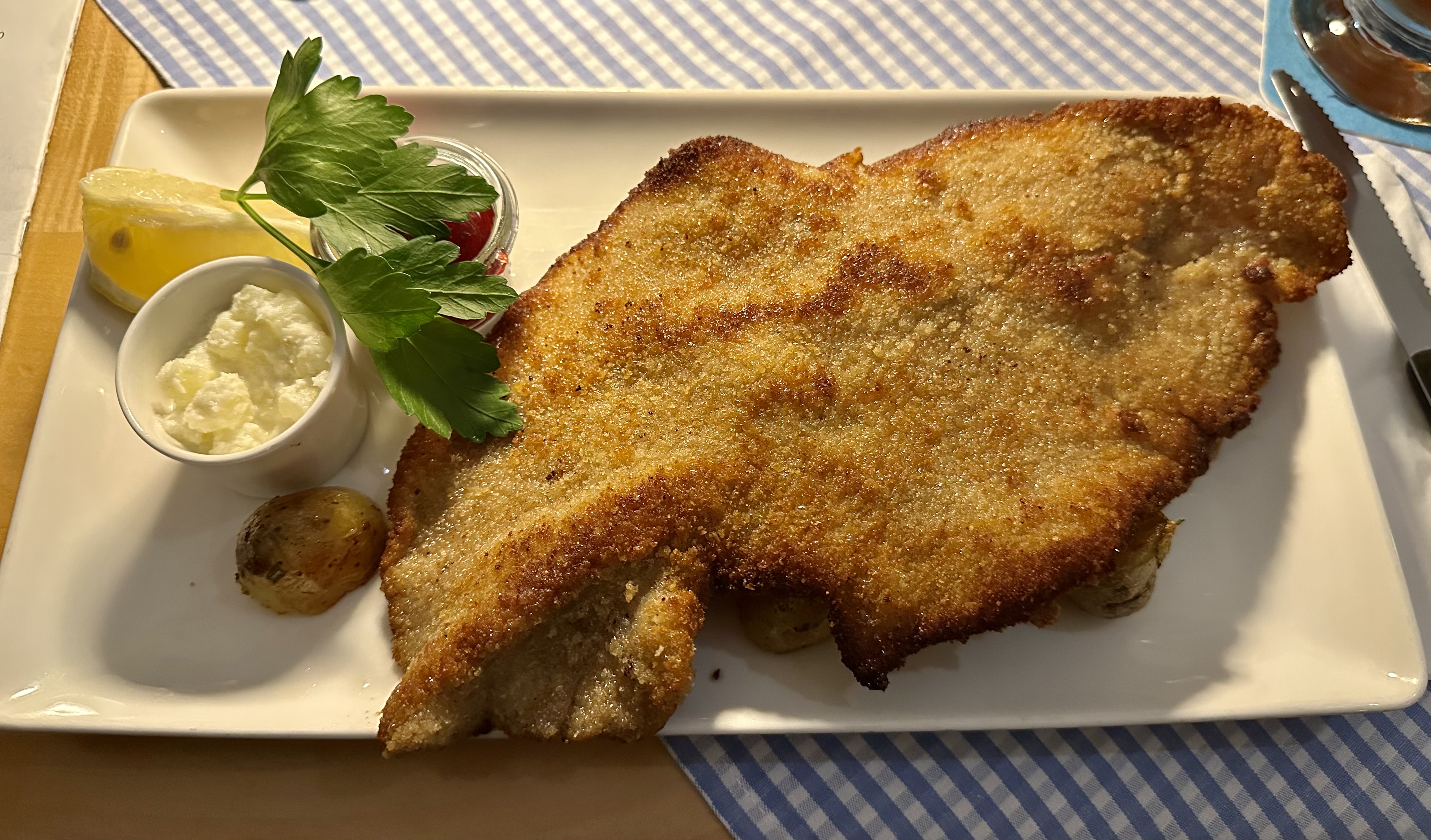
The Löwenbräukeller, established in 1883 and situated right next to the brewery, is a historic beer hall. It offers traditional cuisine (like schnitzel) and freshly brewed beer. There is also an outdoor beer garden that houses up to 1,000 guests. It’s debatable whether the Keller offers an authentic Bavarian experience. Still, the beer is fresh and cold and delicious, and there’s absolutely nothing wrong with the food, as long as you’re a fan of meat and potatoes.
As we eat and discuss all the things we should be doing instead of ending up at the one place our colleagues said we should avoid, one of us gets worked up. He remembers something. He gets up and walks around. Suddenly, he disappears into one of the many valved rooms inside the Keller. After a few minutes, he gets back and sits down. He picks up his oversized beer mug, takes a sip and says, “I’ve been here before.”
Not an epic story, admittedly. People tend to return to places they like. But there’s a wistful quality to his recollection of what is clearly a warm memory. Then he figures it out. “It was about 35 years ago, and I was here with another Zenseactian.”
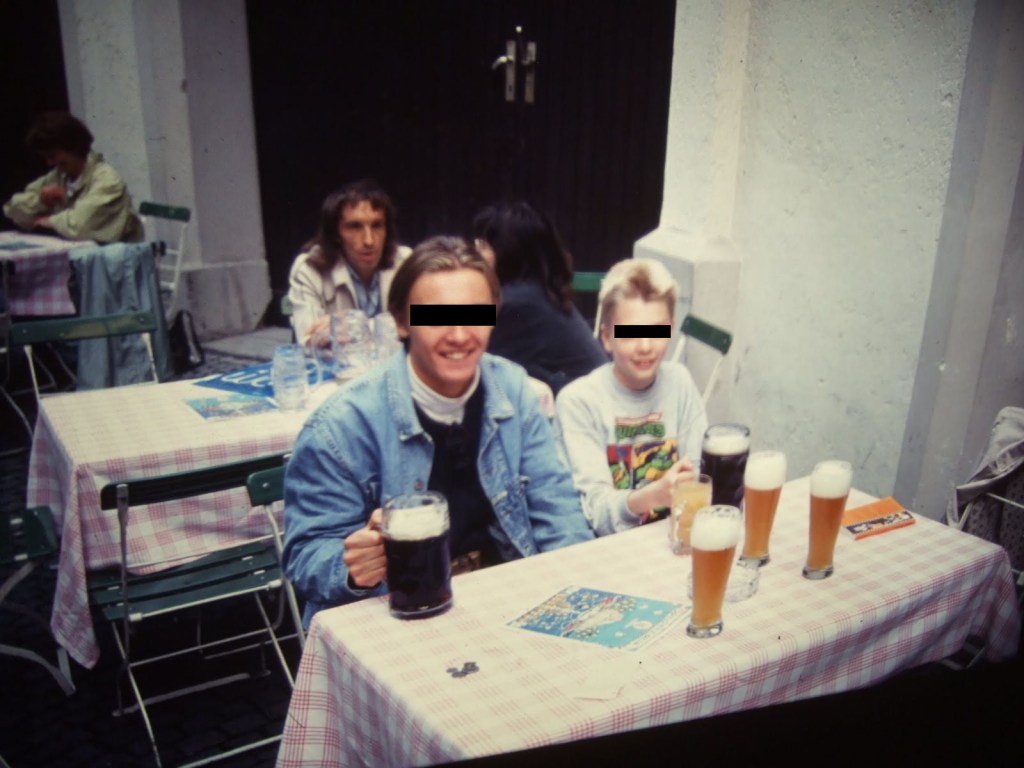
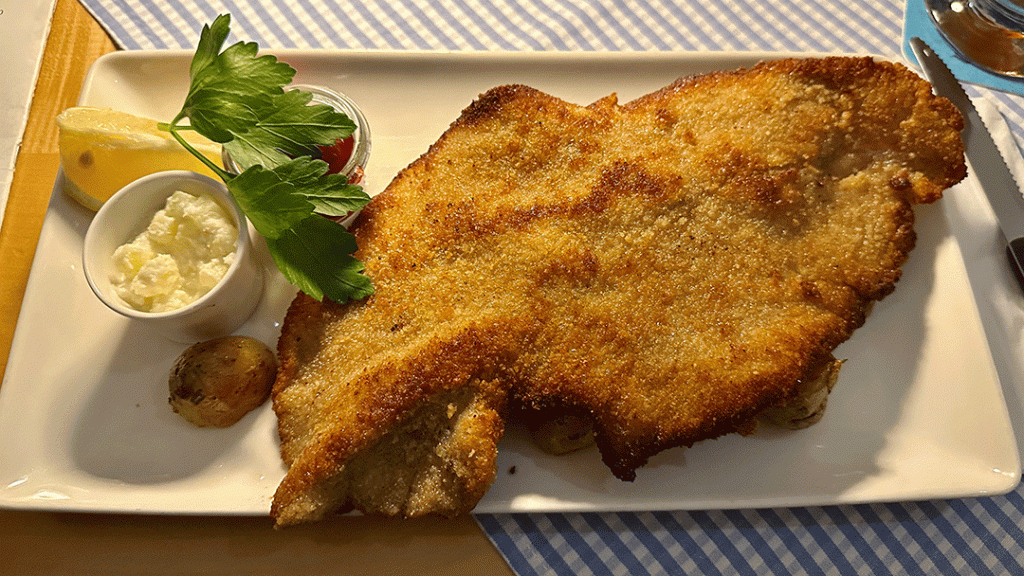
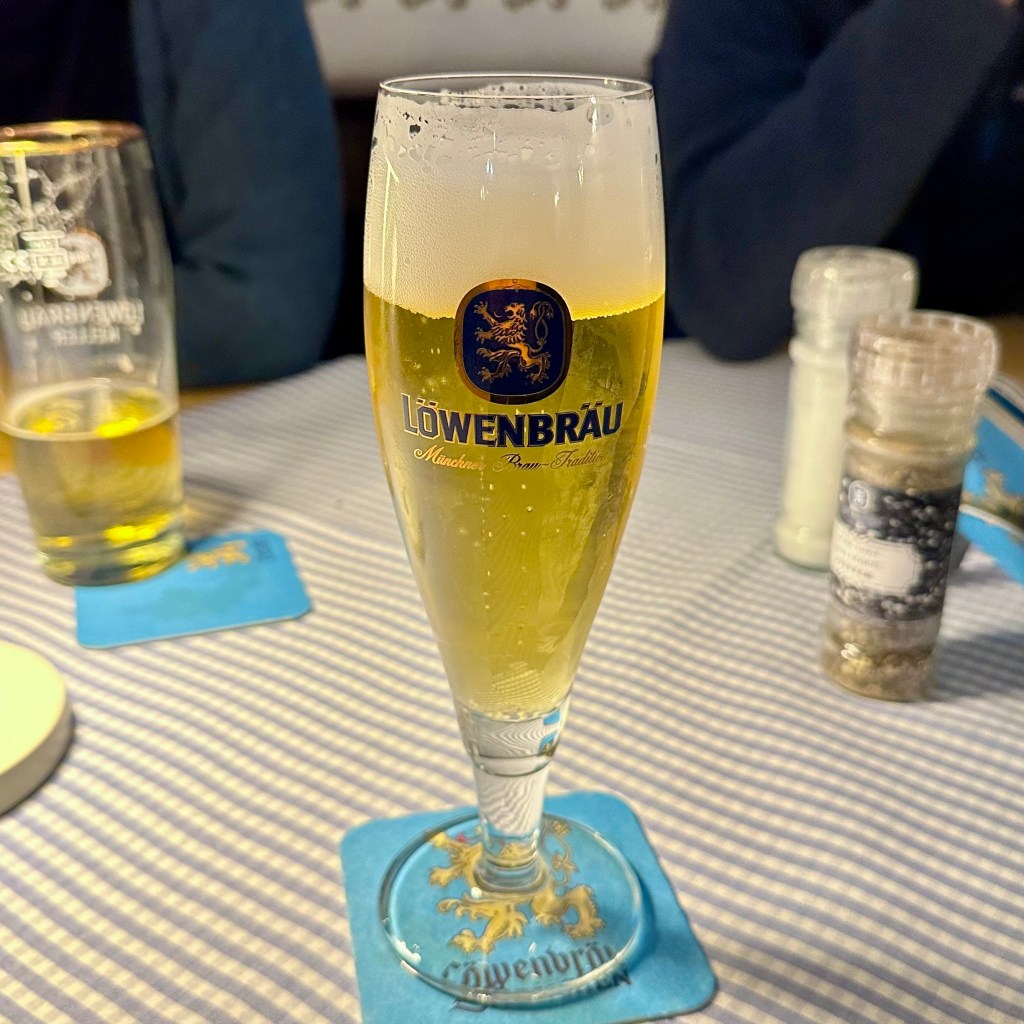
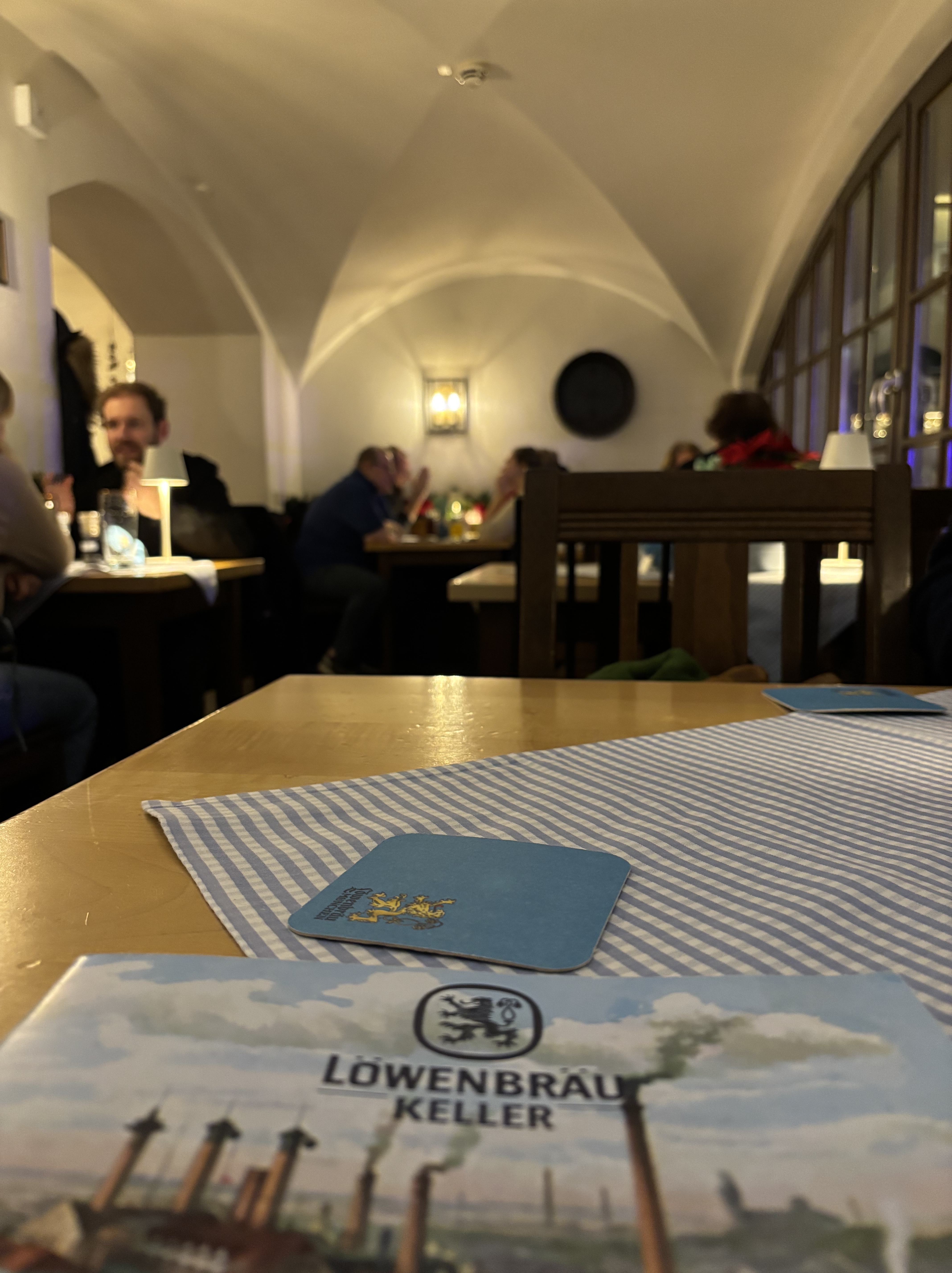
Having relished his memories for a while, dinner is over. And what more is there to say about it? Not much. But the atmosphere was roomy and friendly. There were couples on dates, larger parties, and the occasional lonely drinker. Lots of tourists, of course. Quite a few after-work businesspeople, much like us. All in all, it was much as advertised.
Also, our hearts weren’t it. Mainly because we were already thinking ahead. To breakfast. To the moment we’d face the ultimate Bavarian challenge.
The food that puts the deli in delicious. The Moby Dick of sausages. The Weißwurst.
The monks who founded Munich, however, did not get the chance to eat Weißwurst. According to local legend, the sausage wasn’t invented until 1857. The most commonly accepted story claims that on February 22, 1857 (very precise indeed!), a young innkeeper at the restaurant Zum Ewigen Licht near Munich’s Marienplatz ran out of sheep casings for regular sausages. He improvised by using thicker pork casings, fearing they might burst if grilled, so he boiled them instead. The resulting sausage became known as the Weißwurst.
So even though proper Weißwurst etiquette is a relatively recent phenomenon, it’s not something you ignore. But we weren’t worried. Swedes aren’t strangers to pigskin sausage. Take Isterband – a lightly smoked, coarsely ground sausage with a tough casing that most people (but not all) remove before eating. Still, eating Isterband lacks the ritualized preparation of Weißwurst, a sausage you’re actually meant to suck the meat out of. This troubled us immensely.
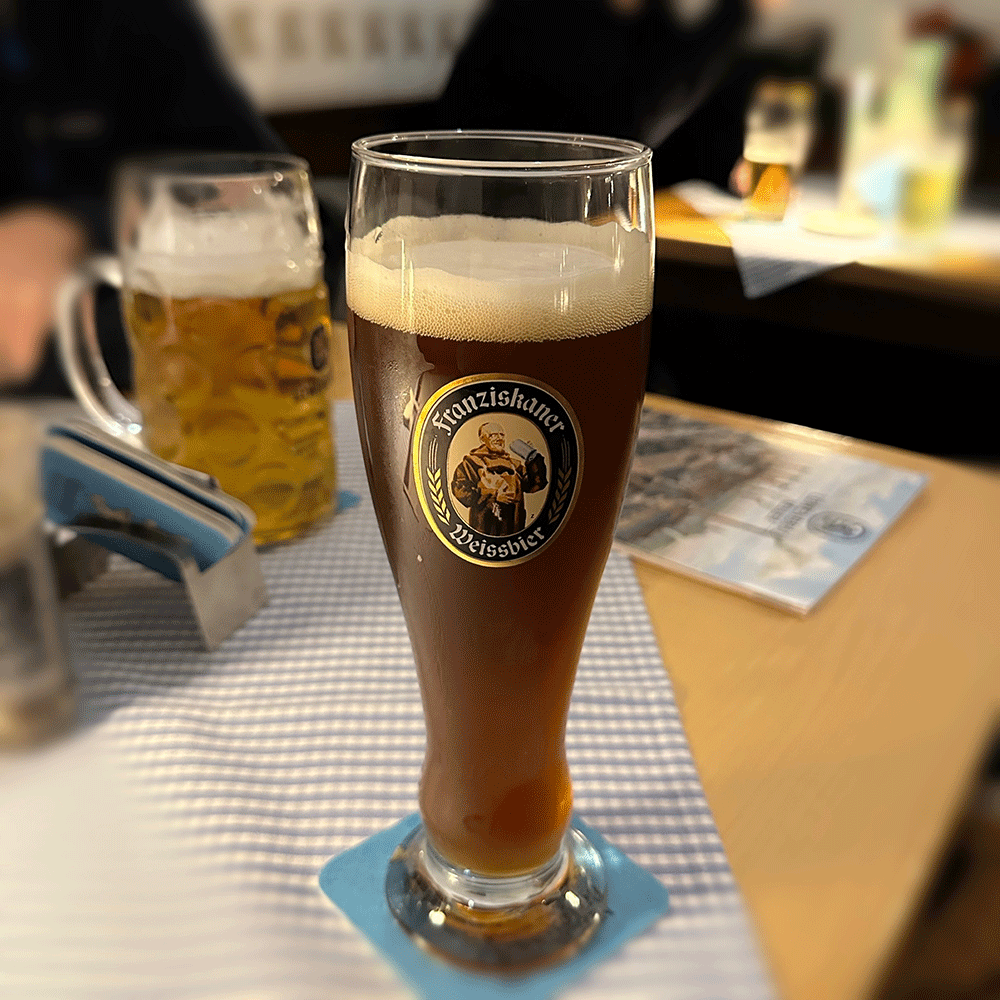
But it didn’t stop us. Eating crayfish and lobster also involves a fair amount of ceremonial sucking and making disgusting sounds. The main difference is that those foods are often camouflaged by heavy drinking in the company of rowdy friends, in the cover of darkness. The Weißwurst is typically eaten in the naked morning light, when you’re already at your ugliest. Apparently, it’s moderately acceptable to drink wheat beer to steady the nerves. But we were on the job and could have none of that.
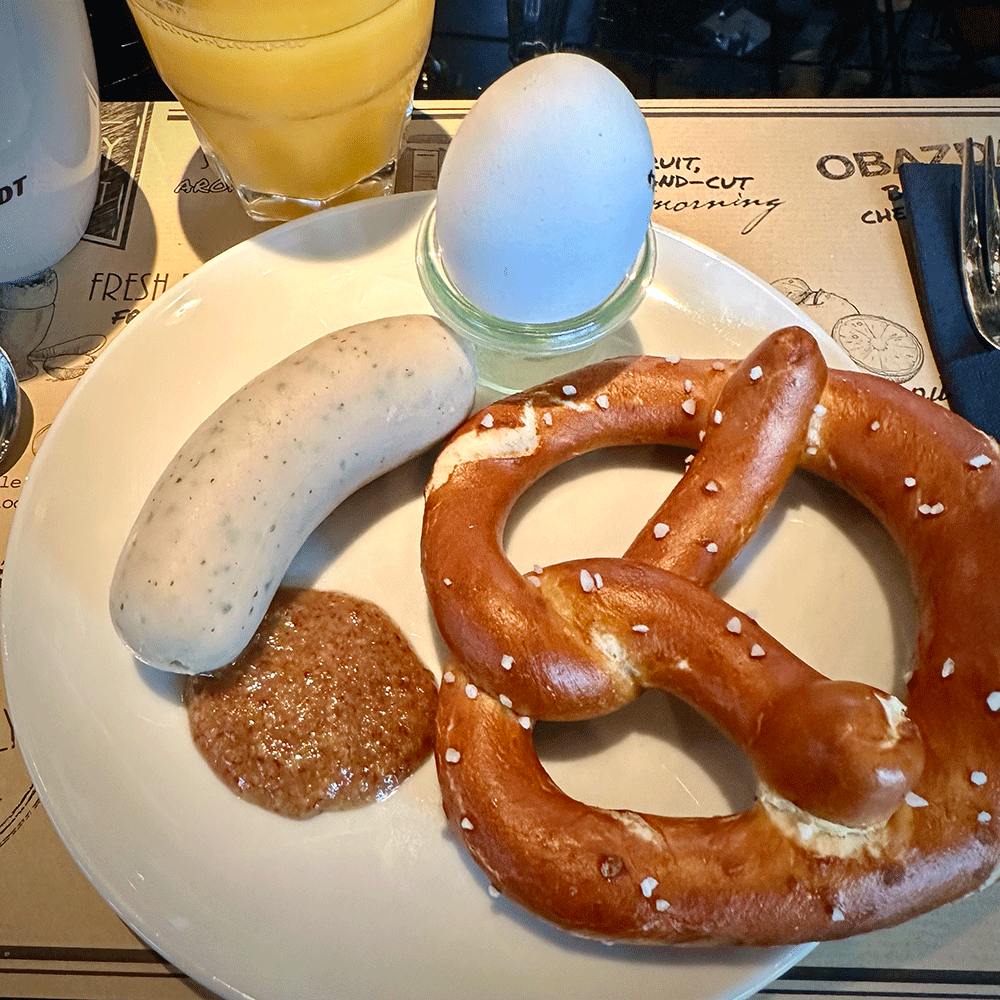
So: sausage, pretzel, and sweet, sweet mustard. It was time to get to work.
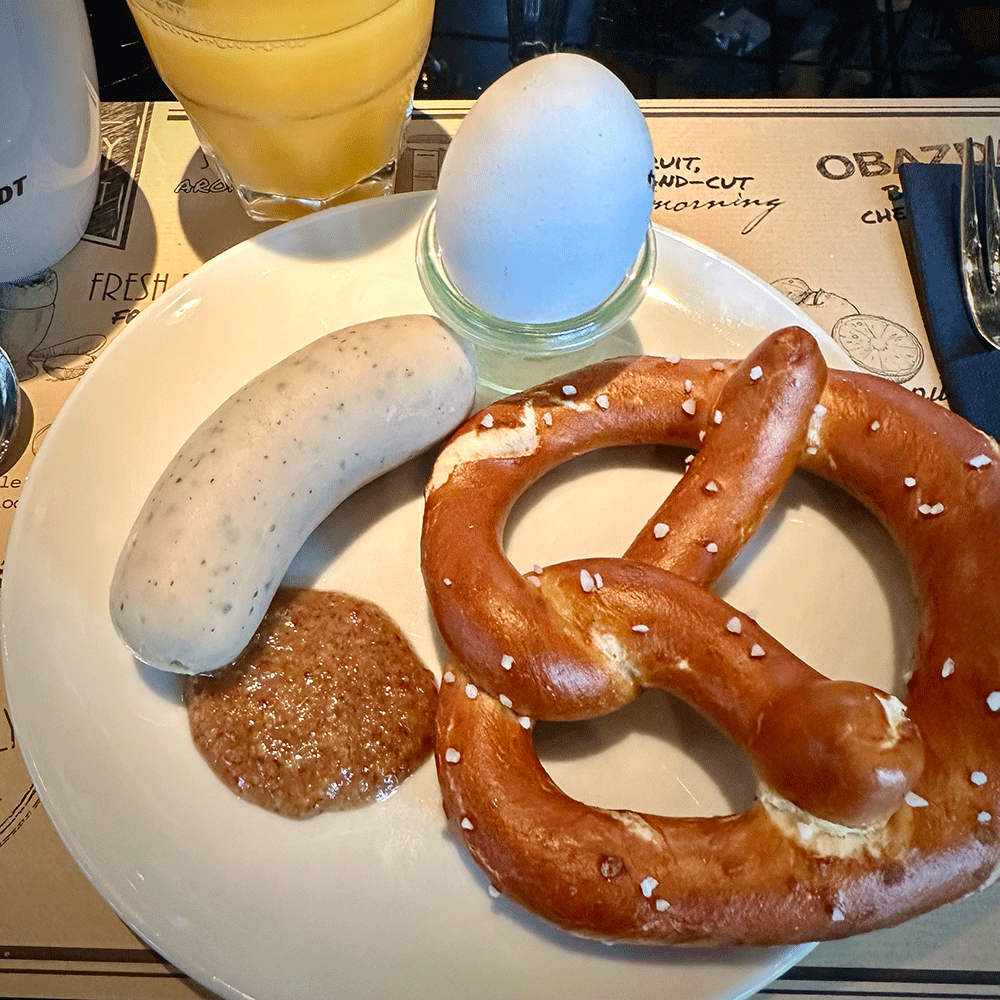
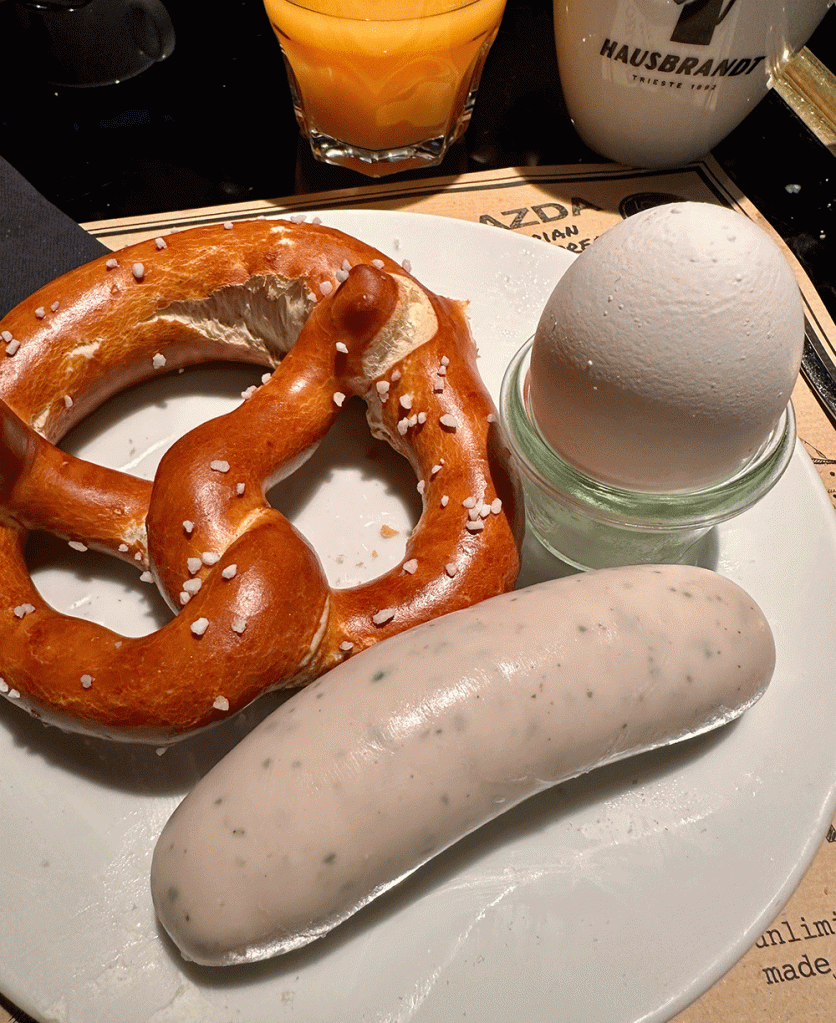
And it was great! Stunning. Delicate and mild, with a smooth, creamy texture. The flavor was subtle, perhaps more aromatic than bold, to be honest. Paired with sweet mustard and a warm pretzel*, it was super comforting and quite rich.
For those long-time readers who remember the cataclysmic depravities of our injera experience, this was nothing. Okay, we probably broke a few of the rules, but nothing major. While sitting in my room at the Ruby Lilly Hotel the night before, I thought I might have to call this text “Wurst episode ever” (or any number of wurst/worst-related puns). Luckily, it didn’t come to that. Not a millimeter of skin ingested. Not a single sideways glance from the locals. The only mildly disappointing moment came when the mustard suddenly disappeared and one of us wandered into the cleaning closet, mistaking it for the kitchen.
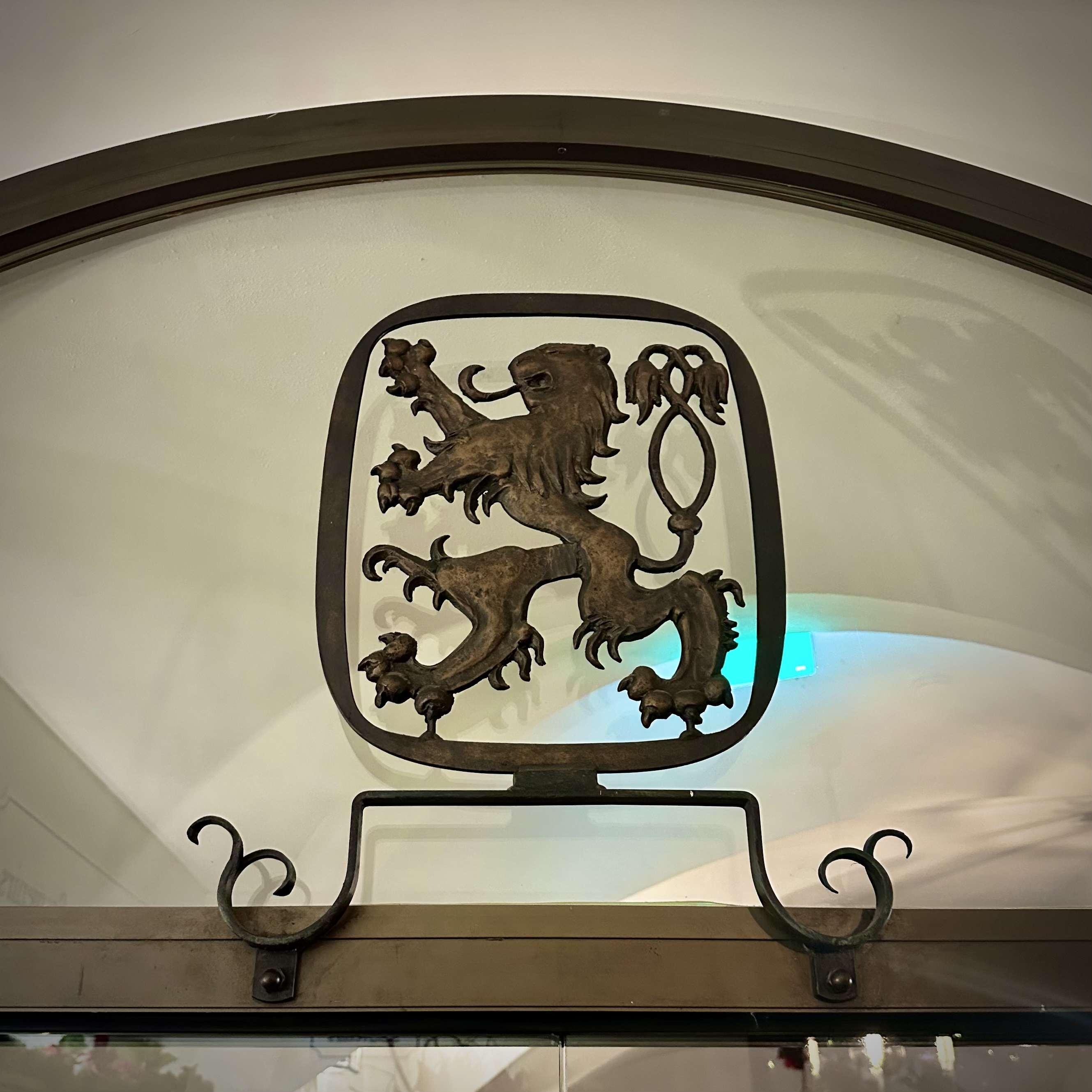
All in all, Munich was a terrific experience. And we walked away proud as lions.
- Name: Löwenbraukeller (Schnitzel) + Ruby Lilly Hotel (breakfast sausage)
- Cuisine: Bavarian
- Walking distance from Zenseact: With rest days, ferry waits, weather delays, plan for 7–9 weeks
- Price: N/A
- Rating: 5 NCAP stars (Norra Älvstranden Culinary Assessment Program)
- Pro tip: If you’re flying down, don’t take the 06.00 departure. You need a good night’s sleep to appreciate Munich.
We’ll hopefully return shortly with another review. In the meantime, heed the great Robert Frost’s advice and choose the road less traveled – a wise gastronomic approach and an outstanding professional mantra for every Zenseactian.
*In Germany, a pretzel is called a Brezel (plural: Brezen or Brezeln, depending on the region). In southern Germany, especially in Bavaria, Breze (Brezen) is more common. In other parts of Germany, Brezel is the standard term. We think. @Lukas, sounds about right?

 Off the eaten track