I was 17 when Fredrik asked if I wanted to go with him to Valvet.
Fredrik, with his irresistible charm – voice like a 12-year-old girl, a laugh bright enough to lift an eclipse, and curly brown hair down to his arse. How could I possibly refuse his invitation to join him on a big-city adventure?
I remember it like it was yesterday: a windy October night, walking in a slight stoop to brace the wind, eyes tearing up, shoulders hunched, dressed in jeans, a denim jacket over a T-shirt, worn-down Chucks, and a scarf. Hands buried in my pockets up to the elbows.
We’d gotten off the 300 bus from Kinna about half an hour earlier and were making our way across Gothenburg to Järntorget, to a club to see a fearsome metal trio: Immolation, Massacre, and At The Gates. I really had no business being there, but there I was. Terrified of not getting in. Terrified of actually getting in and facing the full-moon-drunk rockers with their flea-bitten dreadlocks. Terrified of being spotted as an outsider. I knew, in my heart, that as soon as I set foot inside, they’d see me for who I was: someone who listened to Level 42 and occasionally wore cologne.
But if they did, they didn’t make a big deal out of it.
Instead, as my mind and eardrums gradually surrendered to the growling, impossibly loud noise, they absorbed me. At first, unaccustomed to the dynamics of this fleshy particle collider, I was helpless as a pinball, bouncing off other people’s shoulders – a fish spinning in a net. But as I got the hang of it, I became a weed folding into the tide, a wave merging into another.
Eventually, during a moment of serenity – unelbowed, untramped, and unshowered in beer and saliva – I decided to let that night mold me into whatever it wanted. Even if it meant getting deaf, drenched, and diseased.

I don’t remember getting home. But the day after, ears still ringing, I burned my Aqua Limone sweater in the backyard and put on a Napalm Death T-shirt. I would’ve worn it to school if my mother hadn’t accidentally shrunk it. So I bought a Carcass long-sleeve, only for that, too, to mysteriously vanish.
Regardless of the aftermath, that night at Valvet meant something to me. Something profound. It didn’t make me an outlaw. Oh no. I still played tennis. I still listened to Level 42, and I still went to Marstrand for the summer. But I had realized something: death metal goers weren’t necessarily misogynistic devil worshippers prone to sadistic violence. Sure, they could be crazy, drunk, loud, and fragrant, but they could also be friendly and inclusive. This lot didn’t steal my clothes and kick me out into the street with a pentagram carved into my buttock, which I might have accepted as a suitable punishment for trespassing.
Another important takeaway was this: my furry friends seemed happy with who they were. And they had found a place to meet and share their love for music. In Valvet, they had a club that catered to those pursuing life outside the norm.
Which, naturally, meant it never stood a chance in Gothenburg.
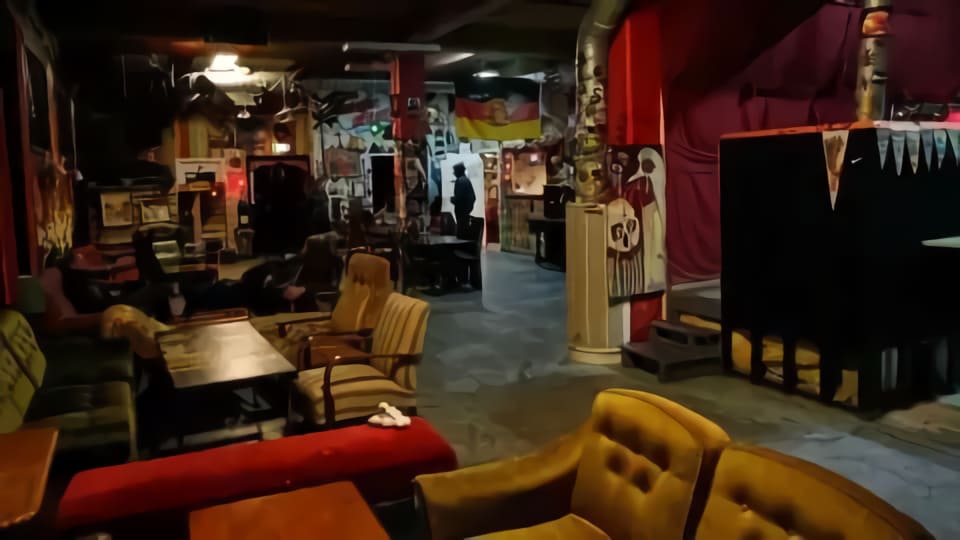
Valvet opened in 1988 beneath the arches of Första Långgatan 12 and was run by the non-profit ARRG (Aktionsgruppen Rädda Rocken i Göteborg – Action Group to Save Rock Music in Gothenburg). It was a small space. With room for about 150 people, it gave local bands a stage. Acts linked to the early Gothenburg metal scene, like At the Gates (formerly known as Grotesque), played there regularly. By 1993, however, growing noise complaints from nearby residents forced it to close.
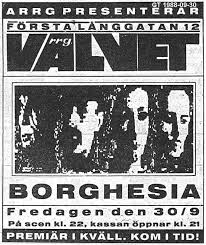
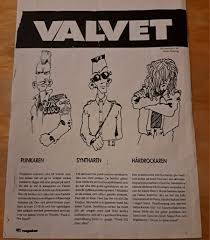
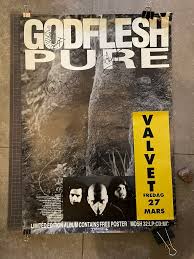
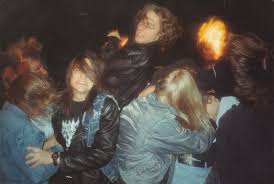
Old promo stuff images I borrowed from a Facebook group called “Vi som hängde på Valvet” (“We who used to hang out at Valvet).
But Valvet isn’t the only culturally significant music venue that got swallowed up by the city. In 1966, a place called Cue Club opened at Norra Larmgatan 6 (an address that no longer exists, in case you were wondering where it is). In September 1969, Cue Club moved to Kungstorget 14, and the opening band was Deep Purple. Other famous rock acts, like Fleetwood Mac, Jimi Hendrix, Yes, Nick Cave, Oasis, and Motörhead, also performed there.
When Cue Club burned down in 1996, it wasn’t just a fire that brought it down. Central Gothenburg was cleaning itself up, and the scene suddenly looked out of place.
Several other clubs lived and died more in the margins. Draupner near Järntorget, for instance, felt more like a bunker than a club. This is where my lunch buddy swears he’s never heard volume like when the Belgian Electronic Body Music band à;GRUMH… played on 3 December 1987. Franska klubben mixed culture and chaos before bureaucracy snuffed it out. Dart Vader, Rocksteady, Fryken, and Teaterkompaniet followed the same arc: bursts of creativity, then silence.
There were countless others. With particular fondness, Off the Eaten Track thinks back on all those loud, happy, confused hours at Kåren, Kompaniet, Magasinet, and Sticky Fingers. Boy, did we paint the town red! Together, noisy and stubborn places like that formed an important part of our youth. Some were built to last, others weren’t, but for a decade, they made the city feel alive for my friends and me.
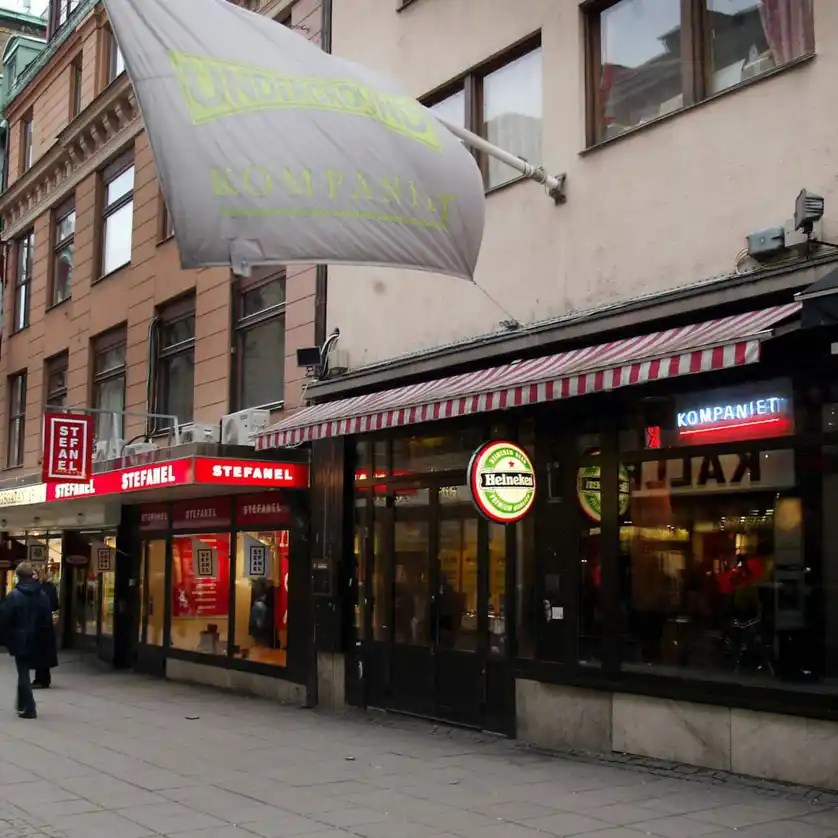


Since the turn of the millennium, however, I’ve lived my life more or less exclusively in the mainstream, swimming in perfect sync with other fishes in the ocean of corporate bliss. Glimpses of alternative options have steadily been provided by my very old and exceedingly loyal friend Fredrik, who, despite every cell in his aging metal body telling him I’ve been a lost cause since 1999, keeps asking me to tag along.
Also, this has to be said, my Off the Eaten Track associate – another long-time friend – is just as drawn to the odd and the off-beat. So while I obsess over what to wear to a leadership meeting or the shitty terms of my car lease, he plans a trip to Sheffield for a week of obscure concerts. When I pull my hair over a poorly phrased bullet list on a Confluence page buried so deep it makes Moria look like a penthouse suite, he soothes me by explaining the nuances of crab core*.
Anyway. It’s through these two that I’ve got to, from time to time, experience the current subculture, mostly organized by Koloni, a kind of music promoter who takes on both local and international bands. They host their acts in all sorts of locales – Ögat, Skogen, Skjulet, and Skeppet.
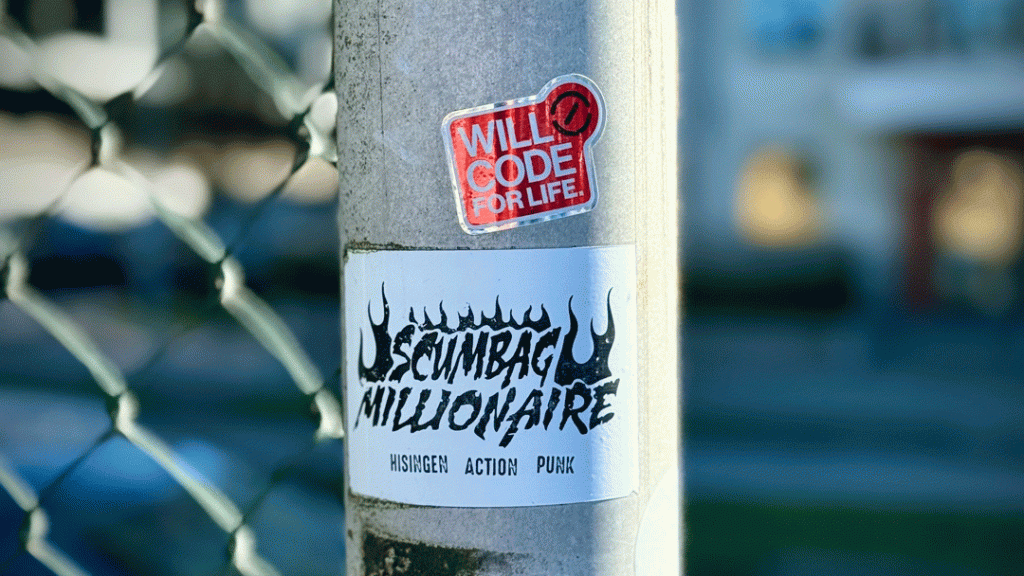
And it was on one of those evenings, years ago, that Fredrik took me to a place on Hisingen.
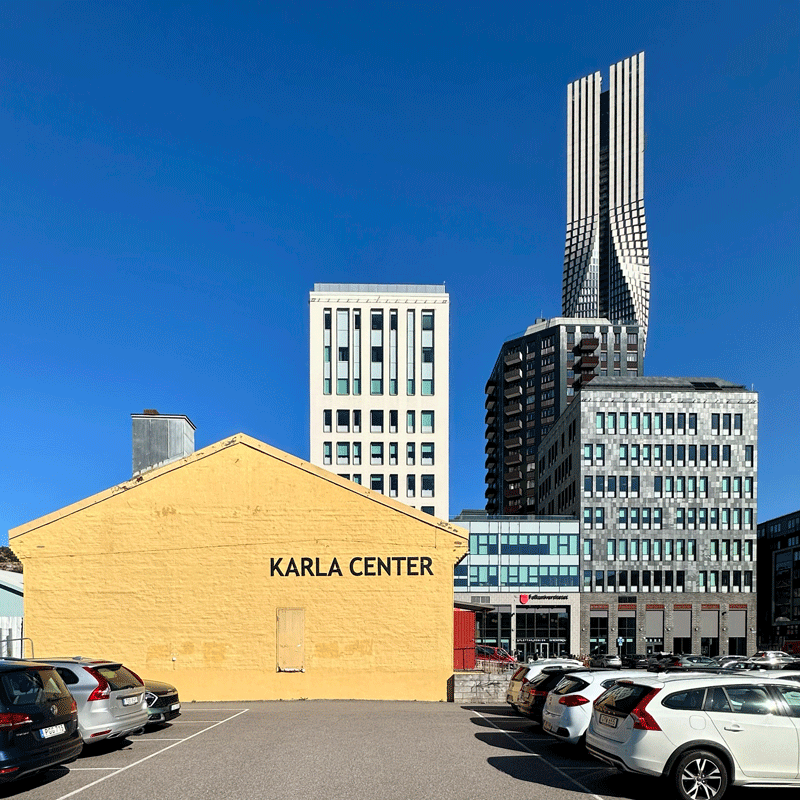
This was on his birthday, a vicious November night, a night when the wind hurled icy, polluted rain at us like daggers. I remember us therefore sharing a taxi, and I could feel the fee eating away at my drinking budget as we drove and drove. When we finally arrived, I had no idea where I was. Hisingen has always been a mystery to me, and it wasn’t until quite recently that I realized I was standing pretty much at the foot of what, today, is Karlatornet.
I unfolded myself from the cab into the windy, wet dark. In front of me stood a low industrial building, long and rectangular, yellow-painted, with a reddish-brown sloped metal roof. A few dark-framed windows lined the front. The entrance, tucked to the far left beneath a small overhang, sat behind a stretch of chain-link fence.
I had finally come to the fabled Truckstop Alaska – and there were people everywhere. I felt much the same as I had when we were about to enter Valvet 34 years earlier – self-conscious, terrified, and not nearly drunk enough. Fortunately, a generous acquaintance had sprung for the cab. And with my budget intact, I was ready to enter.
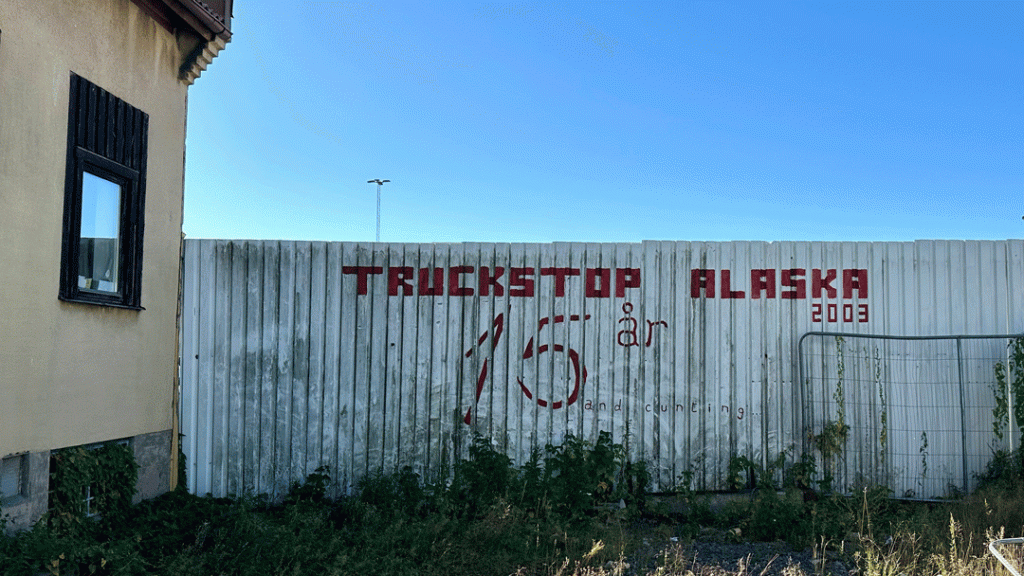
This place, this club nicknamed Trucken, was founded in 2003 by four local girls, and it hosted bands from around the world for years. They started the club in Fiskhamnen and moved it to Hisingen in 2009. In late 2019, the venue announced it would close, with its final show taking place on New Year’s Eve, 2019. This was sad. For a generation uninterested in the mainstream, Truckstop Alaska had been a watering hole.
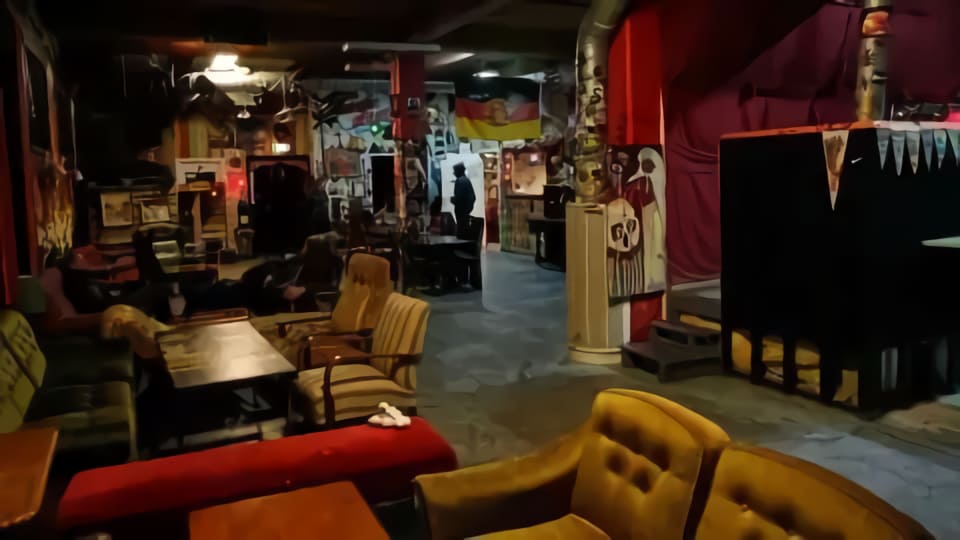
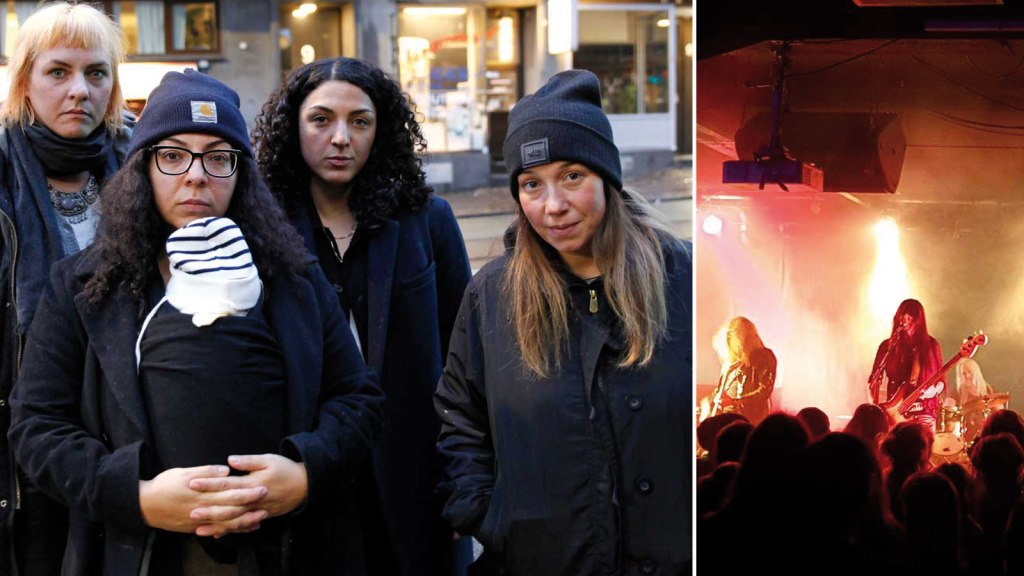
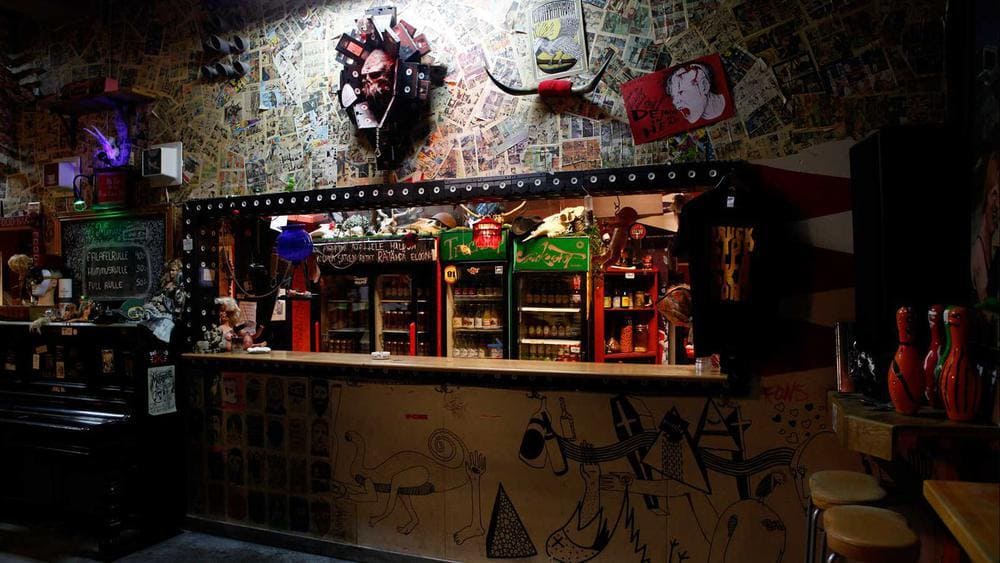
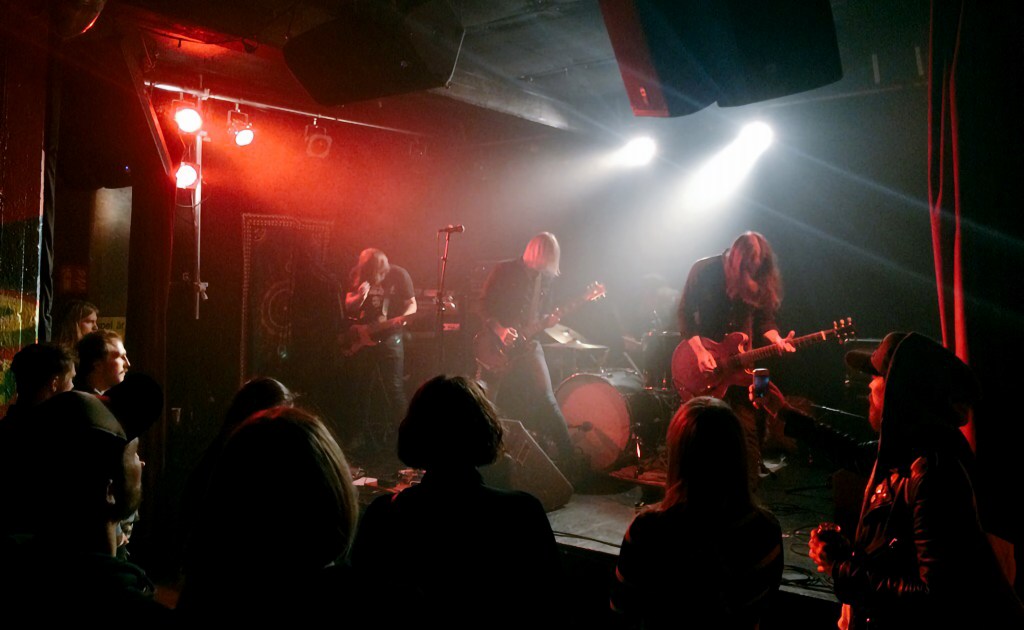
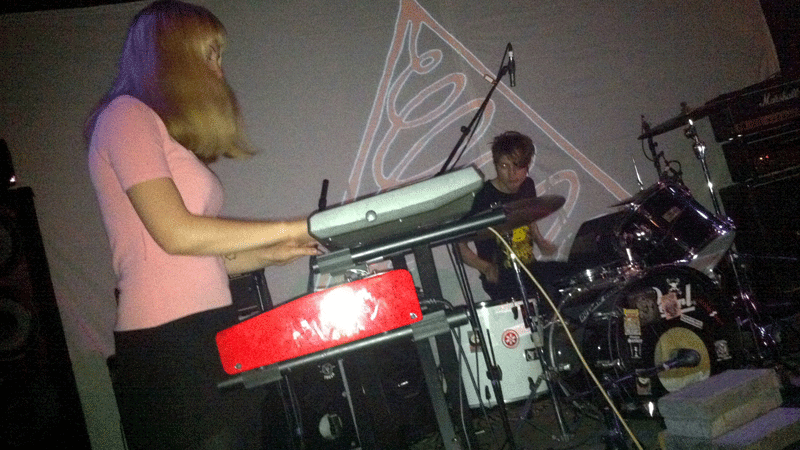
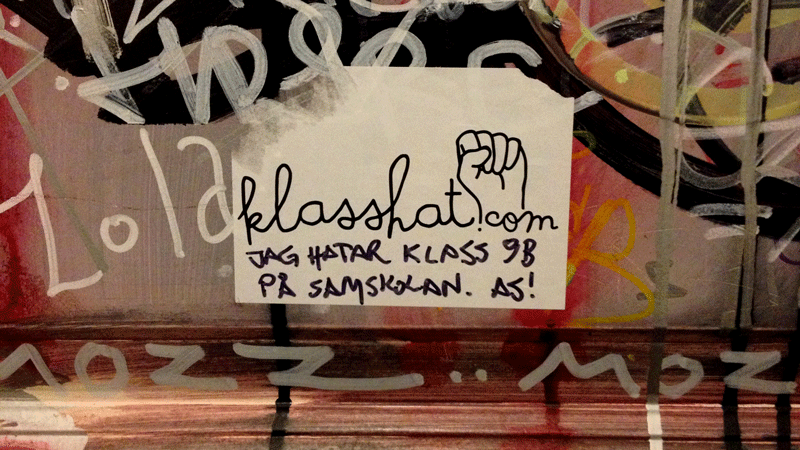
It was a musical venue, sure, but it felt, at least to me, almost like an outlaw refuge. Every year, more than 100 bands played at Trucken. But it wasn’t only about music. Horror films, art shows, wrestling, and flea markets blurred into the nights. The whole place felt like one big collective art installation. They invited people to decorate the space, and some of Gothenburg’s most respected street artists had left their mark. Some pieces were insanely cool.
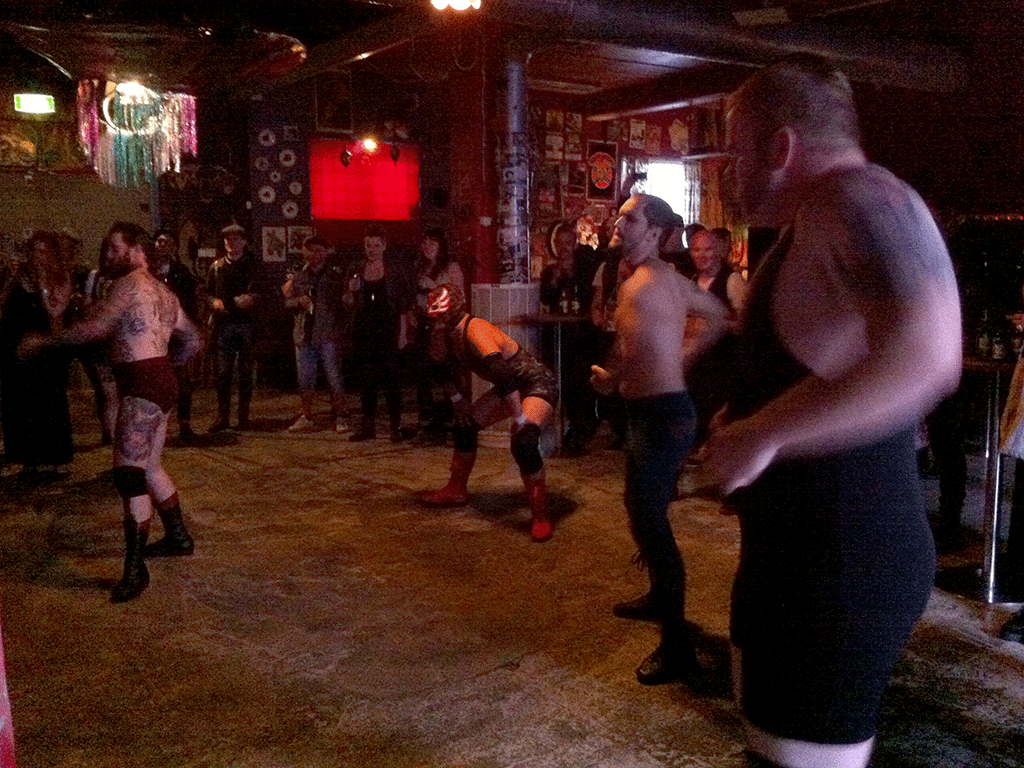
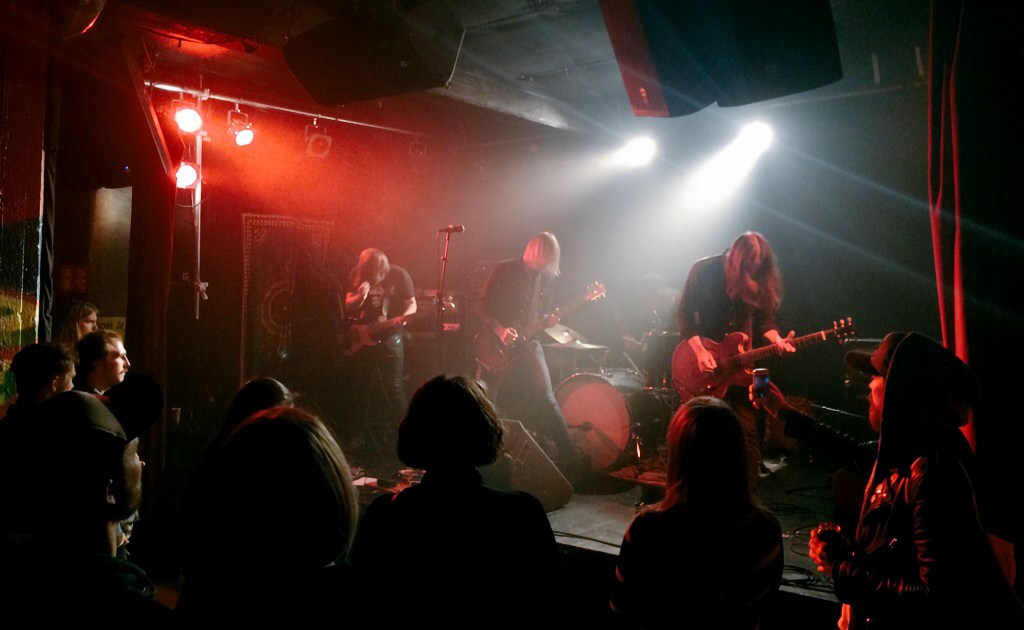
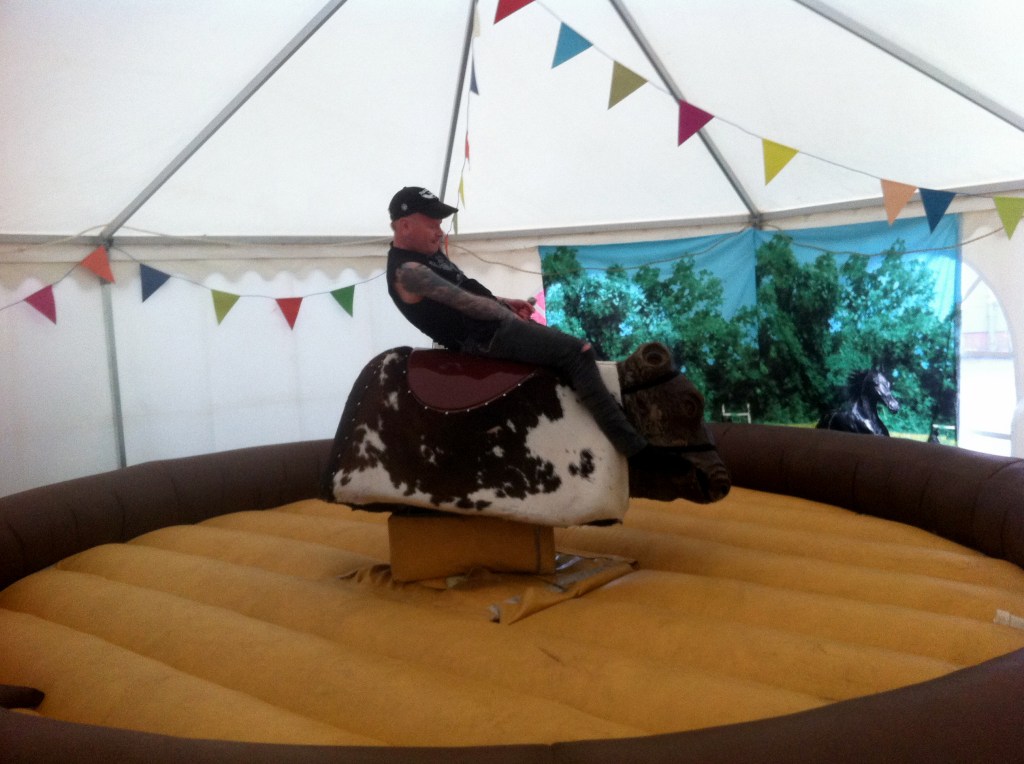

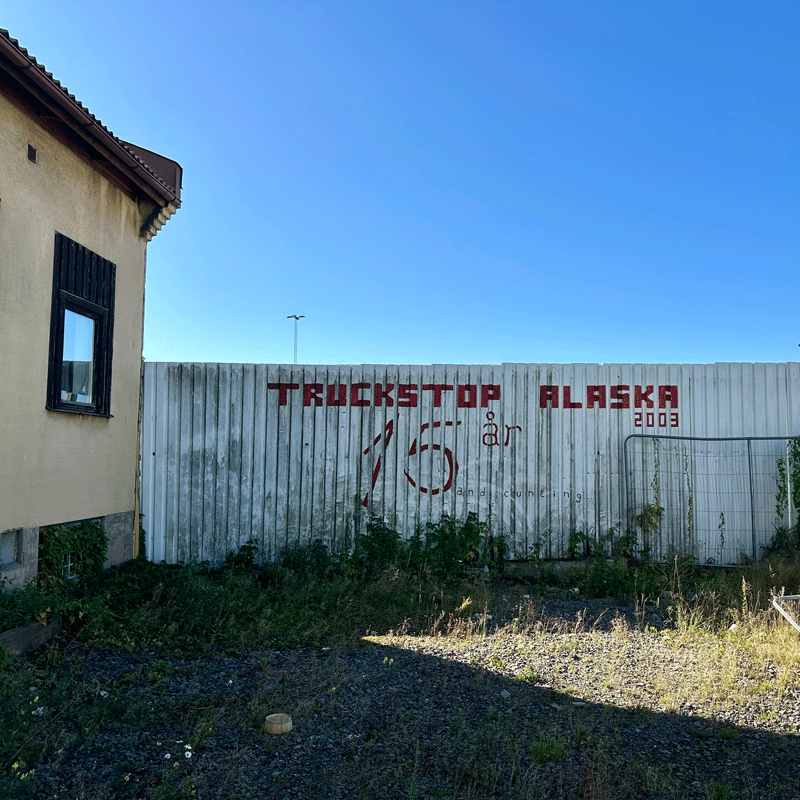
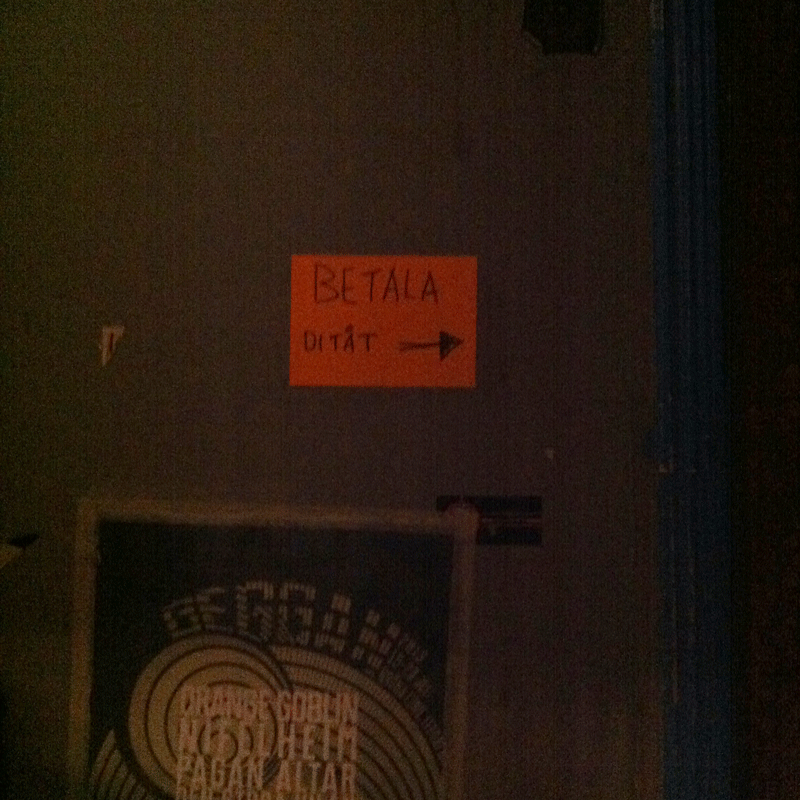
Right here on Lindholmen – the epicenter of shiny, urban, soulless conformity – Trucken offered something out of the ordinary, from 2003 to its final show on December 31, 2019.
Like Valvet, it gave Gothenburg an underground heart – albeit the size of a hamster’s and twice as fragile – beating faintly with punk, metal, and other sounds that struggled to fit anywhere else. Some bands who could be considered “too big” to play at Trucken actually chose to perform here just because of its intimate, no-nonsense atmosphere.
Case in point: on 11 May 2015, Swans (a band from New York that pushes repetition and volume until it becomes a deafening trance) were playing at Pustervik. But Sweden has decibel laws, and Swans refused to comply. To save the gig, it was moved from Pustervik to Truckstop Alaska.
But now Trucken is gone, and what this obituary points to is the systemic breakdown of subculture: the quick, unexamined dismissal of anything outside the norm, the arrogant disruption of cultural practice in the name of what cities prize most: growth. Not progress, not advancement. Just the raw, measurable expansion of the economy.
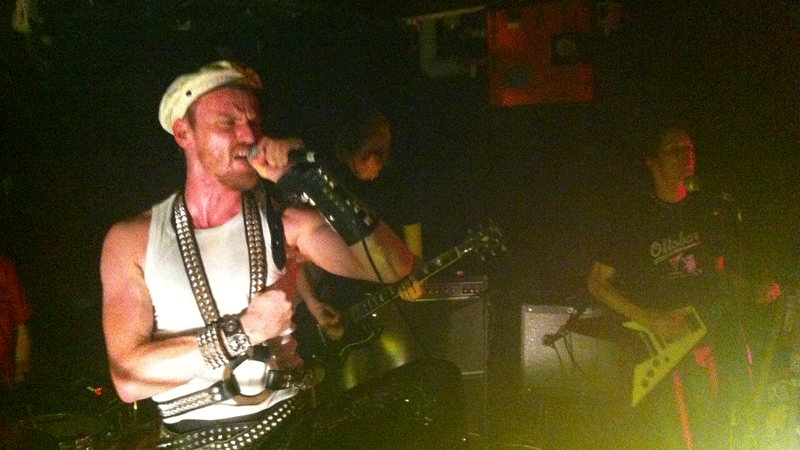


Sure, someone’ll say the music was too loud and that the neighbors complained. What neighbors? Hotel guests at the Radisson? Desk dwellers complaining to HR about some scary emo kids running around the block after dark? Were the beards too long, the tattoos too intimidating, the makeup too much?
Speculation about why Truckstop Alaska shut down was everywhere. In the end, the pattern was familiar: a place that doesn’t play along draws attention, and sooner or later, the police come knocking. That leads to an investigation, typically for serving alcohol without a license. End of story. After a long stretch of diplomacy, discussing finances, permits, and agreements, Trucken suffered bureaucratic exhaustion and said, “We don’t have any juice left to fight the city anymore.” And they closed.
But the bigger question was simple: what future could a place like that have in the shadow of the planned Karlastaden district? In these transitions, as you are all too aware, even if the buildings stay, the soul gets evicted.
On the bright side, who needs a Wisconsin death metal band with three drummers when there’s a fire sale on energy drinks?
Which brings us to Karlacenter, and today’s culinary adventure. Because that’s the venue currently occupying the same building that Trucken once did. It’s important to stress: our issue isn’t with them. Let’s assume – as you always should – that these are good people, working hard to give students and others in Lindholmen affordable lunches. No, our beef is with the city.
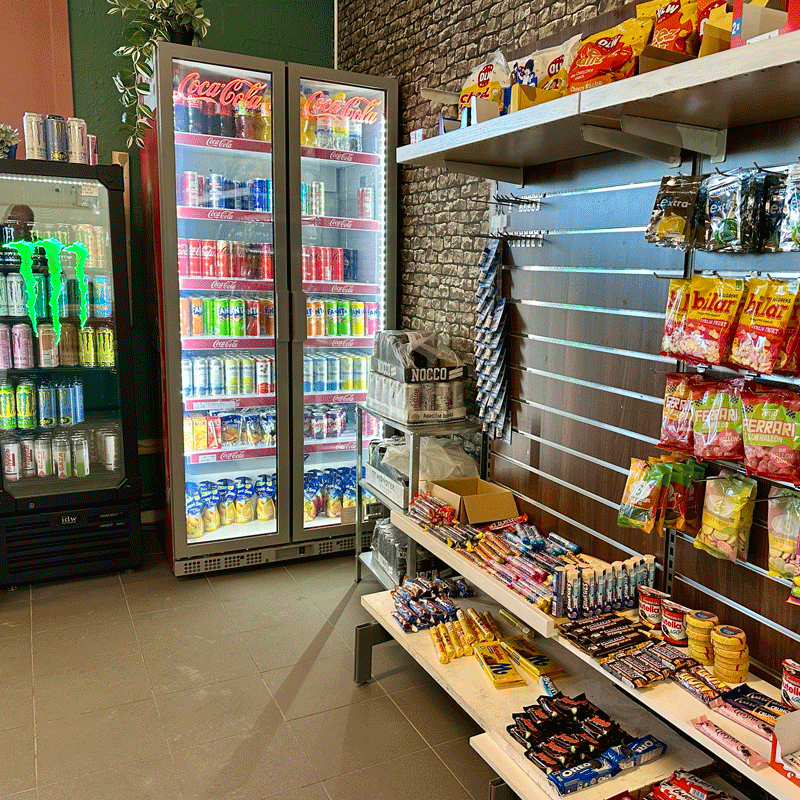
That said – what the hell? I can sort of dig that Karlacenter, not unlike Truckstop Alaska, serves as a kind of youth or recreation center. But what’s with the energy drinks? Kids downing three cans of liquid caffeine before noon. Teenagers wired, jittery, and sleepless – not from booze or drugs or AI, but from what’s technically a soft drink. But hey, if it’s legal, packaged in neon, and sold next to chocolate milk, what’s not to like?
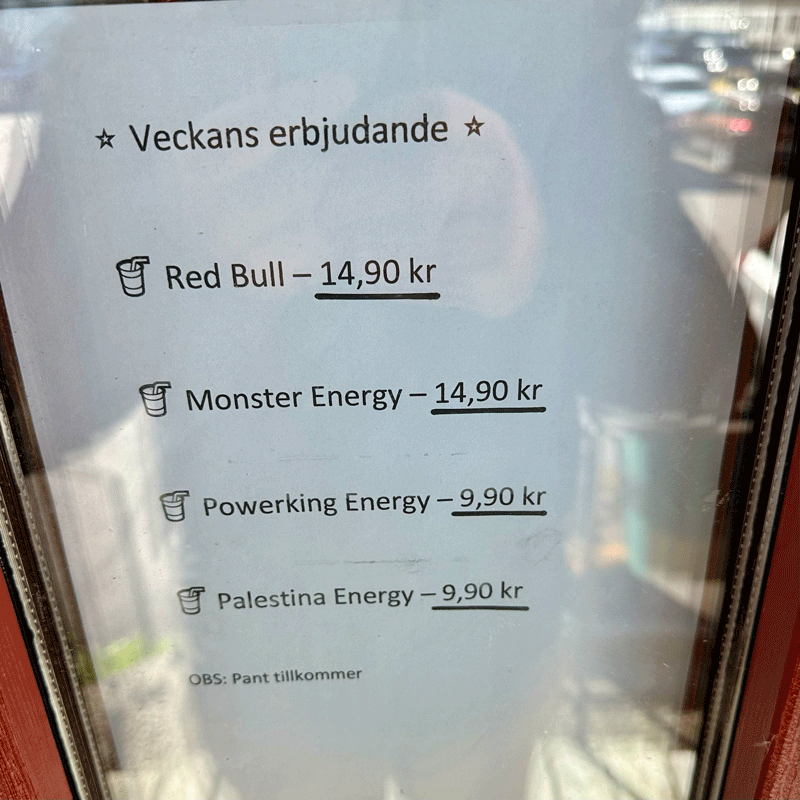

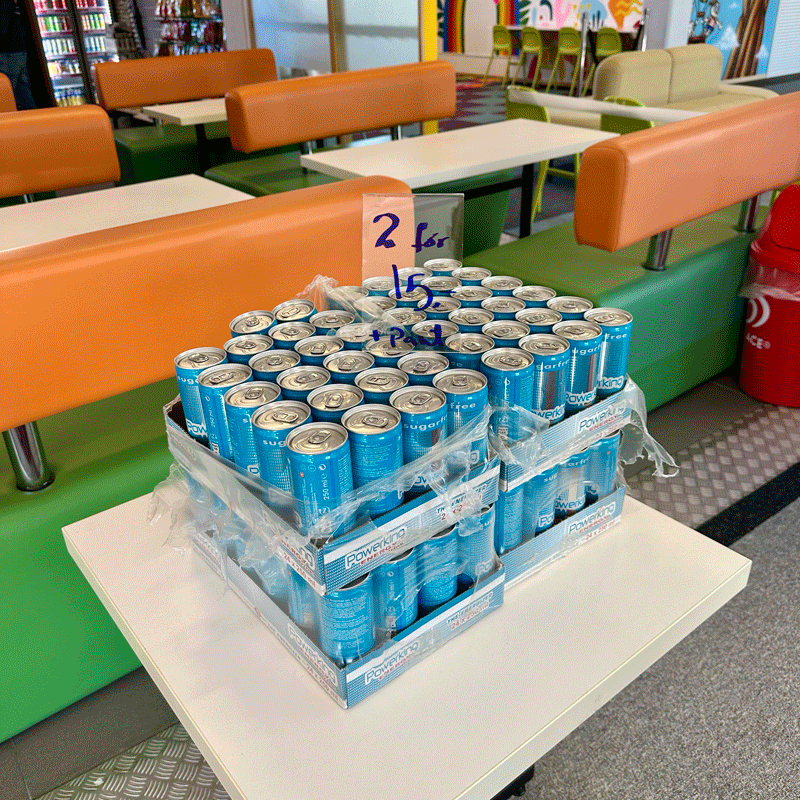
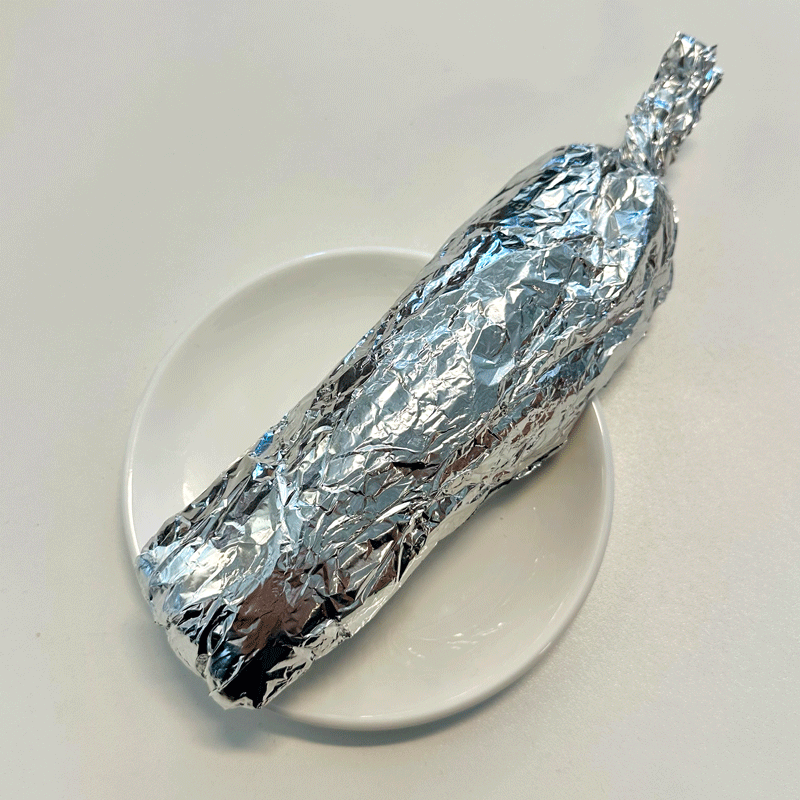
And what about the food? I was going to write “a bit on the frugal side, perhaps”, or something similarly understated. But I’m irritated, which means I’m going for “Dead. Just like Trucken. This is what extinction tastes like.” The Margarita I had was dry, charred, garlicky – and sauced! On the other hand, it was cheap. The pizza was 75 SEK, and the kebabrulle my eating buddy had, which was decent, was priced at 65 SEK.


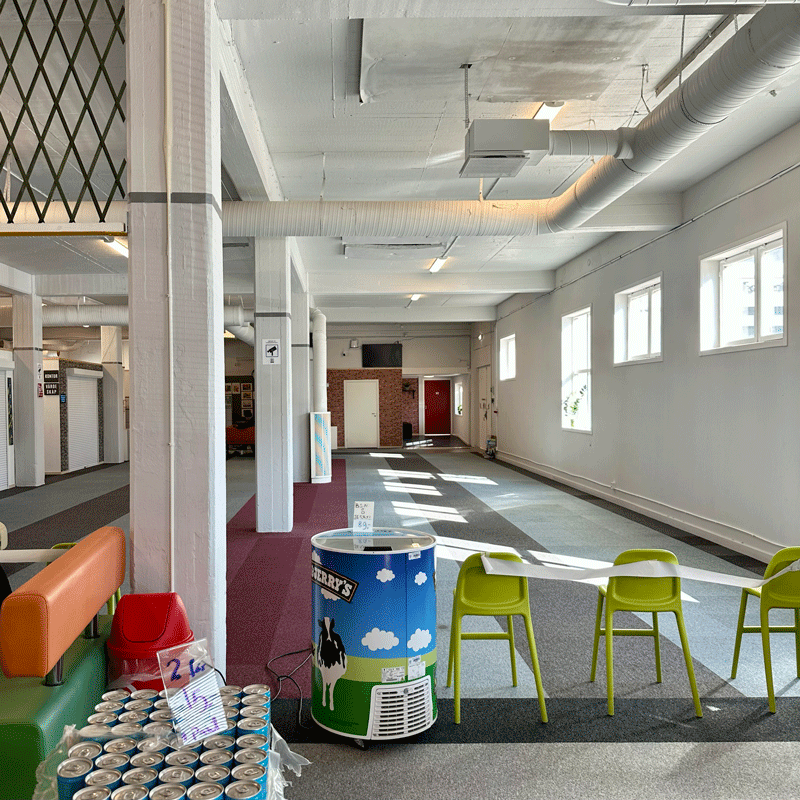
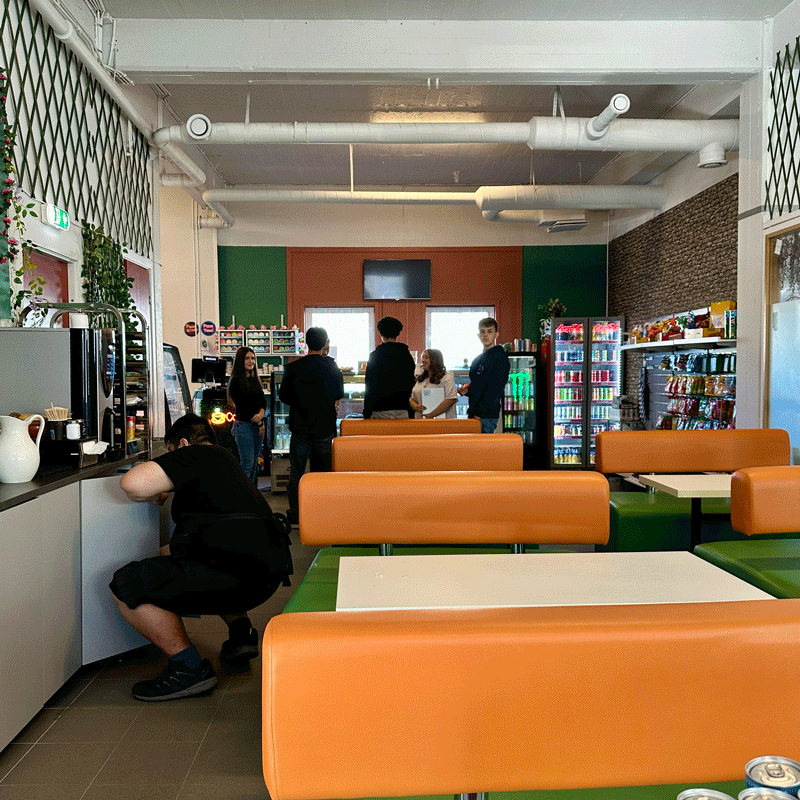
The food is, however, not the only work in progress here. The interior at Karlacenter also needs a generous helping of TLC; the place sells existential dread like Systembolaget sells regret. It feels like a cross between a Pressbyrån, a kid’s dentist waiting room, and the “creative space” at the office of a tax consultant firm.
No. We’re being unfair. The person running the place we spoke with was courteous. He assured us, quite emphatically, that they were just getting started. According to https://alvstranden.com/karla-center-oppnar-i-nya-lokaler-pa-lindholmen/, the idea is to make Karlacenter “a place where visitors can expect a play area for kids (presumably where we were sitting), a café, and a spot for regulars to hang out. They’ll start by opening on weekends with a flea market and later add weekday hours with an art school. The focus is on younger and older visitors, aiming to become a local meeting place in Lindholmen.”
We’re not sure what will happen, but we’ll keep an eye on how this place evolves. After all, this is meaningful ground.
- Name: Karlacenter (Or, as they insist on writing it, Karla Center)
- Cuisine: ultraprocessed
- Walking distance from Zenseact: 5 minutes
- Price: 60–80 SEK
- Rating: N/A
When you end up at Karlacenter for your daily fix of Nocco (or, if you lack incentive, consider it a pilgrimage in honor of Truckstop Alaska), browse this site while you wait for the food: https://truckstopalaska.se
To Fredrik. Thanks.




We’ll return with another review, maybe even of food. In the meantime, heed Robert Frost’s advice and choose the road less traveled – a wise gastronomic approach and an outstanding professional mantra for every Zenseactian.
*The term “crabcore” comes from metalcore bands whose guitarists bend their knees and do a wide, low squat while chugging breakdowns.
**Sweden’s alcohol laws leave very little room for improvisation, but a grey area has always existed around underground clubs and private events. Some venues (like Truckstop Alaska) operate as “members-only” associations to avoid licensing rules, claiming they serve drinks to members rather than sell them to the public. It’s technically possible, but closely watched. For years, that loophole kept certain parts of Sweden’s nightlife alive, until authorities drew a harder line.
 Off the eaten track